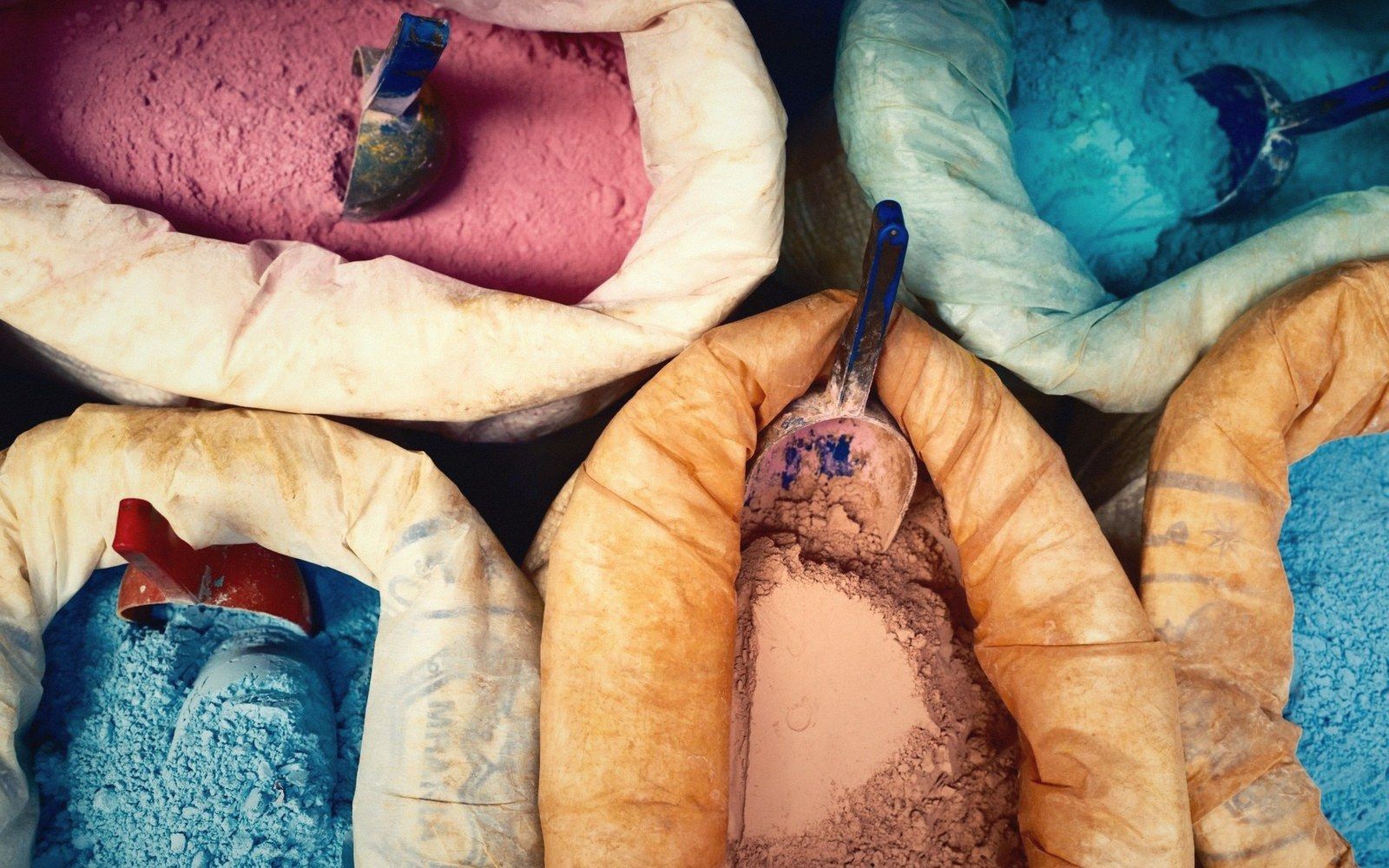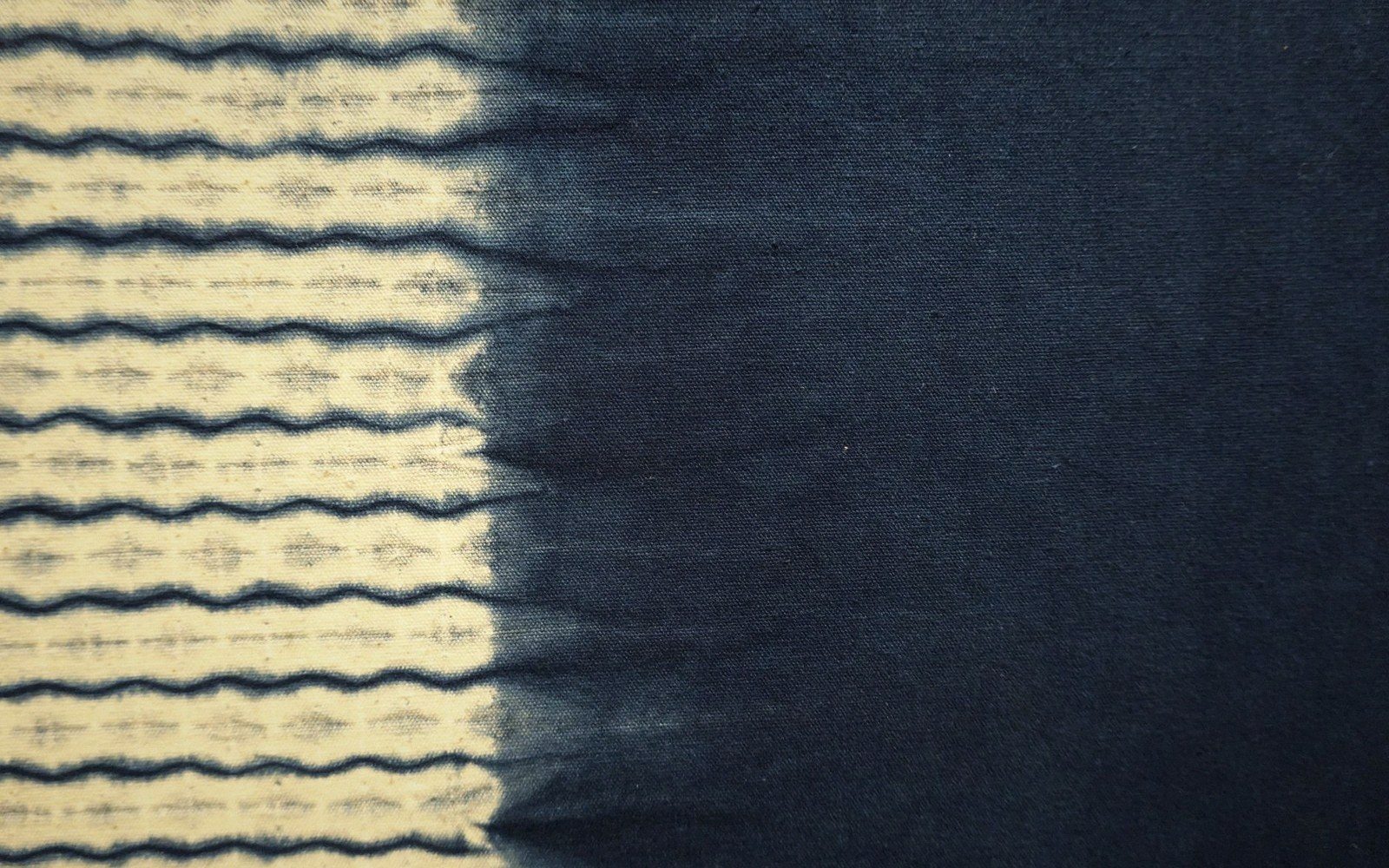
Bagru is a small town on the western edge of Jaipur district where the dominant printing tradition uses neither wax nor chemical resist but a paste made from clay and gum — a material so cheap and local that it barely registers as a technology until you see what it can do. The cloth comes out of the vat with its pattern intact precisely where the paste protected it, and the paste washes free in the final rinse. What remains is a reserved white or cream ground against a dyed field, the foundation of a visual language that has been in continuous production here for several centuries.
01How the resist is made and applied
The paste — called dabu in the regional vocabulary — is mixed from black clay, wheat chaff or sawdust, and lime, held together with a gum arabic binder. The proportions matter: too wet and the paste spreads under the block; too stiff and it won't adhere to the fabric or fill the carved recesses evenly. Printers judge the consistency by feel and by the sound of the block as it lifts. The clay itself comes from a particular deposit near Bagru, and printers insist the local material has the right particle size and adhesion that substitutes lack. After each print, the block is pressed into a pad of resist and then onto the cloth, building a pattern in negative. Sawdust or fine sand is dusted over the printed surface immediately to stop the wet paste smearing when the cloth is folded or stacked for drying.
The cloth — typically a plain-weave cotton — is first scoured in a solution of harad (terminalia chebula, a tannic fruit), which mordants it lightly and gives the undyed ground its characteristic warm cream rather than bright white. After the resist has dried and been dusted, the cloth goes into the dye bath. Indigo and alizarin-based reds are the classic Bagru palette; the dye strikes the exposed cloth and is repelled wherever the paste sits. Multiple rounds are possible, with different resists and different dye baths producing layered colour, though the simpler two-colour cloth — cream ground with a single dyed pattern — is still the workhorse of the tradition.
02Who does this work and where it stands
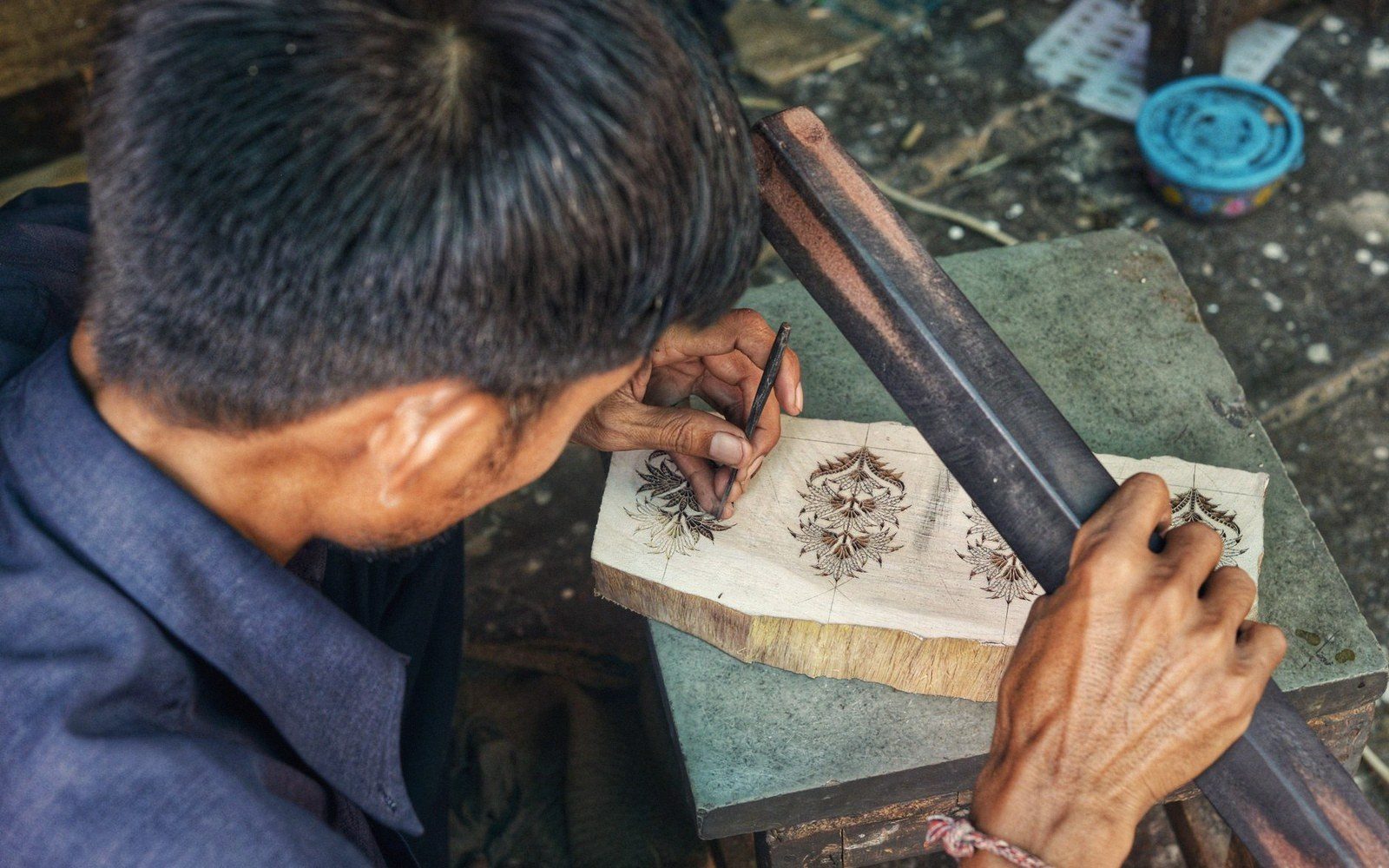
Printing in Bagru is historically the work of the Chhipa community, a caste group whose name derives from chhapna, to print. They work across Rajasthan but Bagru is a Chhipa centre in which almost the entire craft economy of the town bends toward printing and dyeing. The Chhipas have traditionally controlled the full sequence — scouring, mordanting, resist printing, dyeing, and washing — rather than splitting these stages between specialists, which keeps the knowledge of how each step affects the next within a single household or workshop.
The blocks used at Bagru tend toward bold, open geometrics and stylised florals. The workshop patterns of any given Chhipa family are identifiable to a trained eye: the spacing, the choice of repeat, the exact motifs passed from one generation to the next. Dabu's inherent quality — the slight bleed at a motif's edge where the paste meets fabric — gives Bagru cloth a softness of line that block-printed wax resist does not produce, and that distinguishes it clearly from the sharper-edged prints coming from Sanganer, the other major Jaipur-district printing centre, where no clay resist is used.
Dabu cloth was for much of its history a local and regional commodity, worn as everyday dress or used in domestic textiles. Export demand over the past several decades has pushed workshops toward larger runs and, in some cases, toward chemical dyes that replicate the natural palette at lower cost. The identity of the technique — clay resist, natural dye, cotton — remains the selling proposition for workshops that have stayed with traditional materials, and those workshops are careful to keep the distinction visible, because once the paste is washed away there is nothing left in the finished cloth to prove what it once contained.
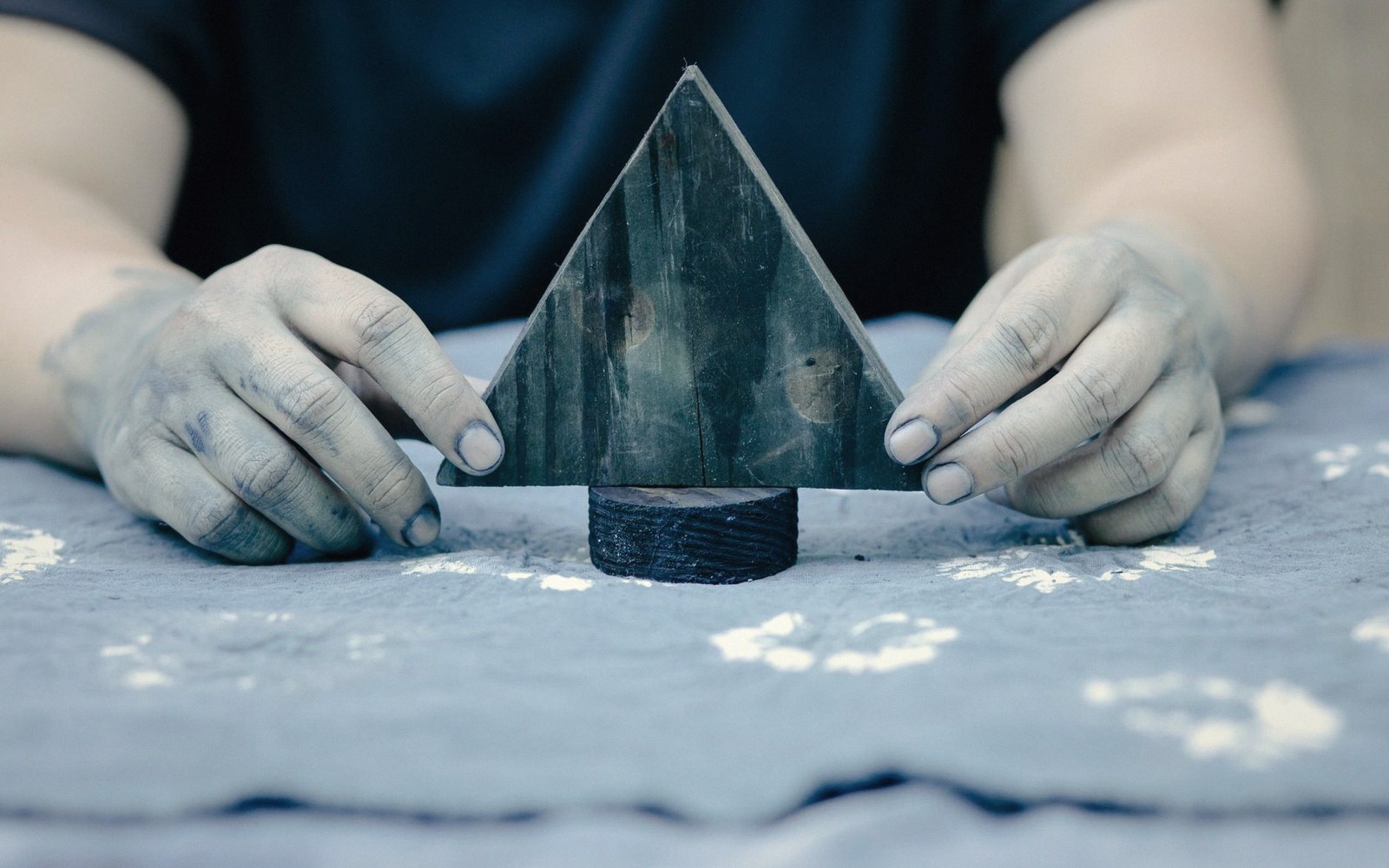
Printers judge the consistency by feel and by the sound of the block as it lifts.