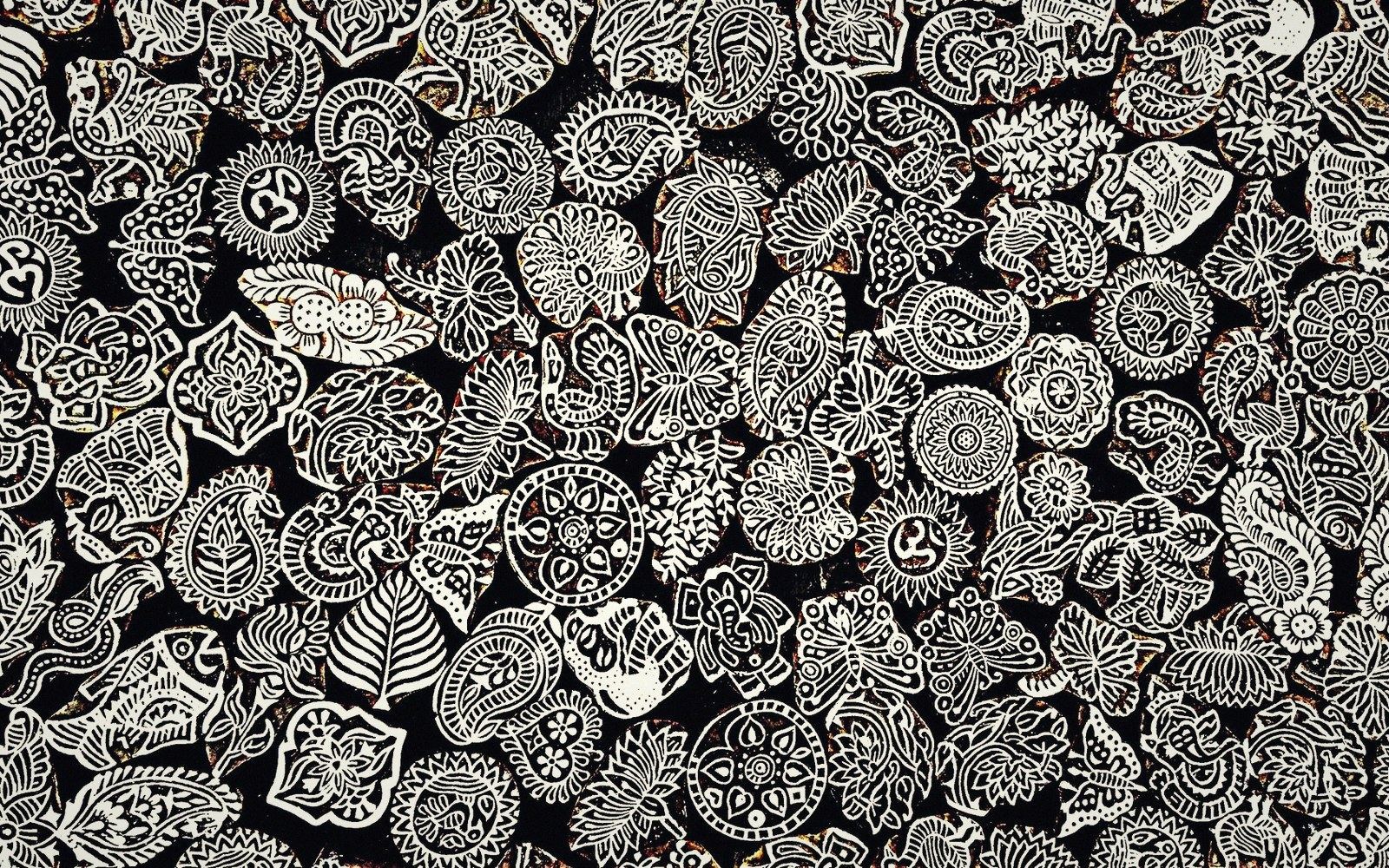
A block cutter in Bagru or Sanganer does not produce a neutral tool. Every chisel stroke carries the maker's particular depth, the angle at which he undercuts a petal, the spacing he leaves between a grid of dots. Once a block is cut and enters a workshop, it fixes a family of decisions — about repeat interval, about how motifs meet at the seam, about whether a fill pattern breaks or holds at the border — that persist for as long as the block survives.
Printers familiar with the major workshops of Rajasthan can often place an unsigned length of cloth by these decisions alone. The combination of a specific outline block with a specific filler is a signature in the way that a handwriting is: not deliberate, not secret, but consistent. A large workshop holds dozens of blocks cut at different periods by different hands, and the internal variation across that inventory is itself characteristic. One workshop favours dense, close fills; another leaves the ground to breathe. Neither choice is accidental — it calcifies over decades into what buyers and wholesalers come to expect.
The vocabulary shifts by region. Ajrakh workshops in Kachchh use geometric interlocks that demand near-perfect block-to-block registration; a misalignment of even two millimetres collapses the pattern logic. Bagru mud-resist workshops in Rajasthan work with looser florals where the resist layer and the mordant layer are cut as separate blocks and must read coherently when overprinted, which produces a different kind of matching discipline.
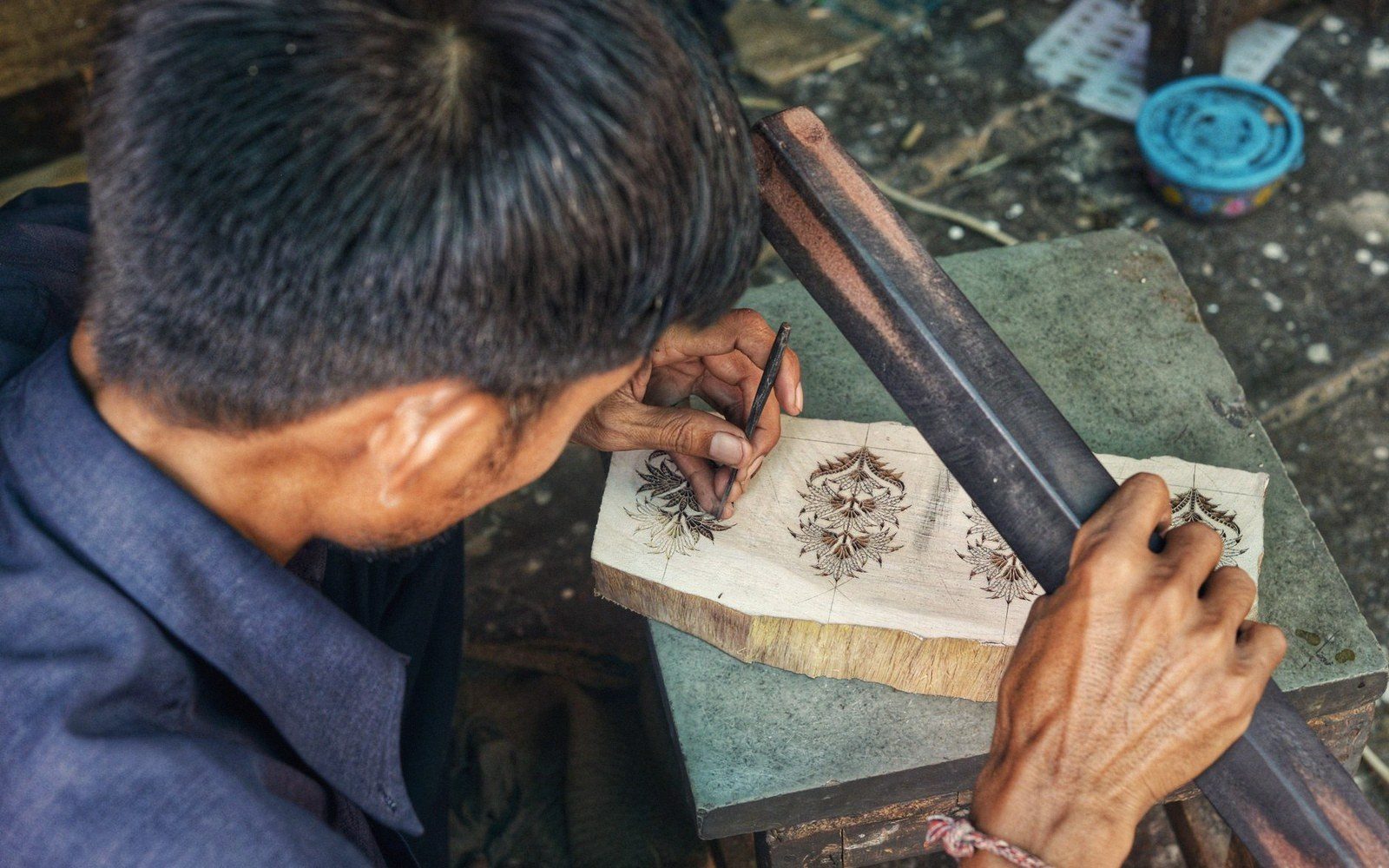
Older blocks — rosewood or sheesham cut fifty or more years ago — are often the most valued pieces in a workshop's store, not for sentiment but because the wood has hardened and the face holds ink with a consistency a new block cannot match for years. When a block breaks or wears past use, a workshop commissions its replacement from the same block-cutting family if possible, asking for a copy, but the copy is never quite the same. The pattern continues; the hand changes.
Printers familiar with the major workshops of Rajasthan can often place an unsigned length of cloth by these decisions alone.