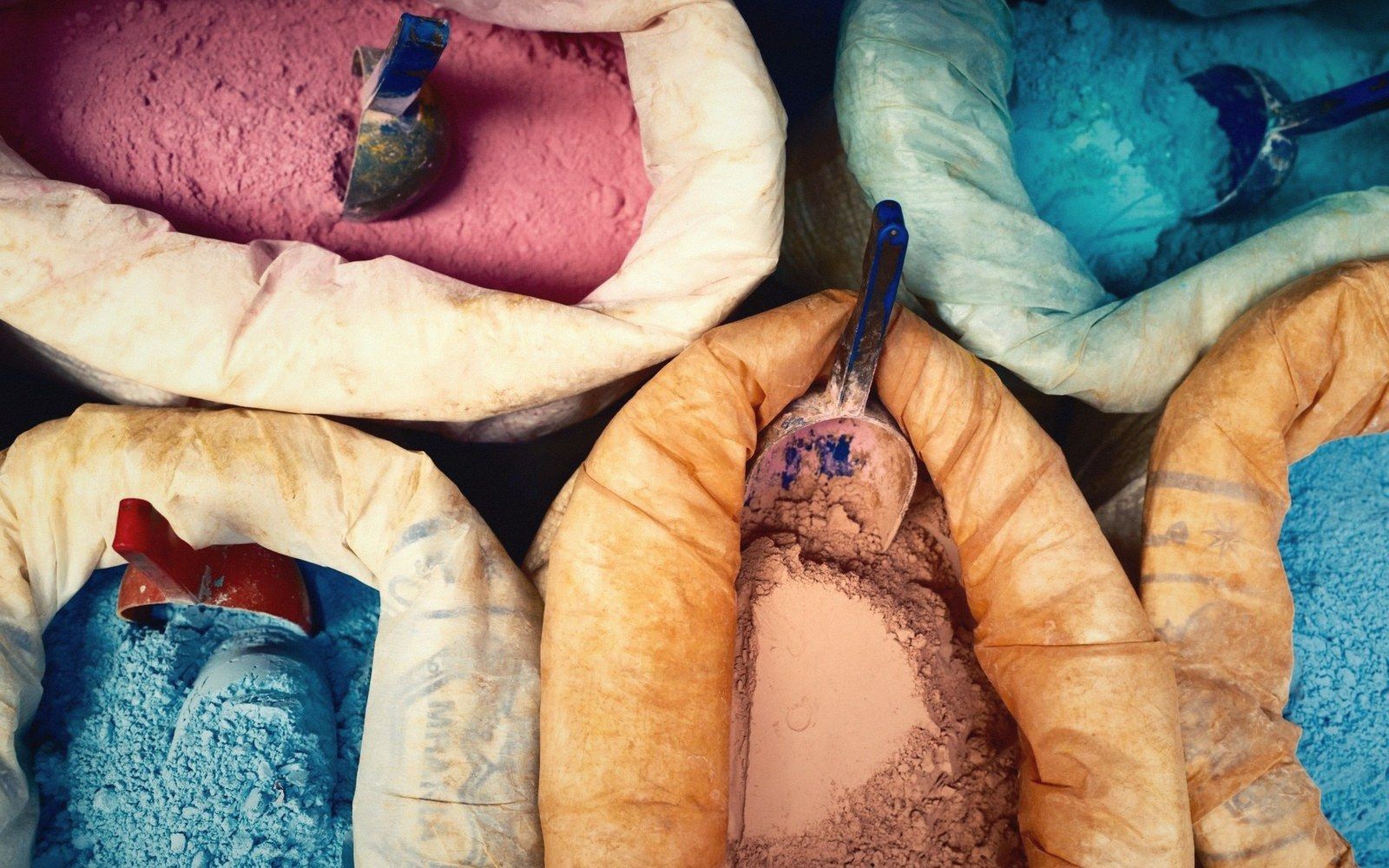
The dye plant supplies the raw material; the mordant decides what colour it becomes. This distinction — obvious to any printer in Kachchh or Bagru, less obvious to anyone looking at a finished cloth — is the real logic behind traditional Indian block printing. Without a mordant, most natural dyes wash straight out. With one, the dye molecule bonds to the fibre and stays. Change the mordant and the same dye bath produces an entirely different colour.
Alum — potassium aluminium sulphate, drawn for centuries from mineral deposits and later traded through colonial supply chains — is the most widely used mordant in the subcontinent's printed textiles. On cotton prepared with alum, madder (Rubia tinctorum and its close relative Rubia cordifolia, known across South Asia as manjistha) gives a clear red. Swap the mordant for iron — iron-rich mud, ferrous sulphate solution, or water left standing with scrap iron — and the same madder bath gives a sombre black or near-black. This is not a quirk; it is the system. Indian printers have exploited the mordant variable deliberately for at least a thousand years, producing polychrome cloth from a small palette of plants by printing different mordants in different areas before the cloth ever enters a dye vat.
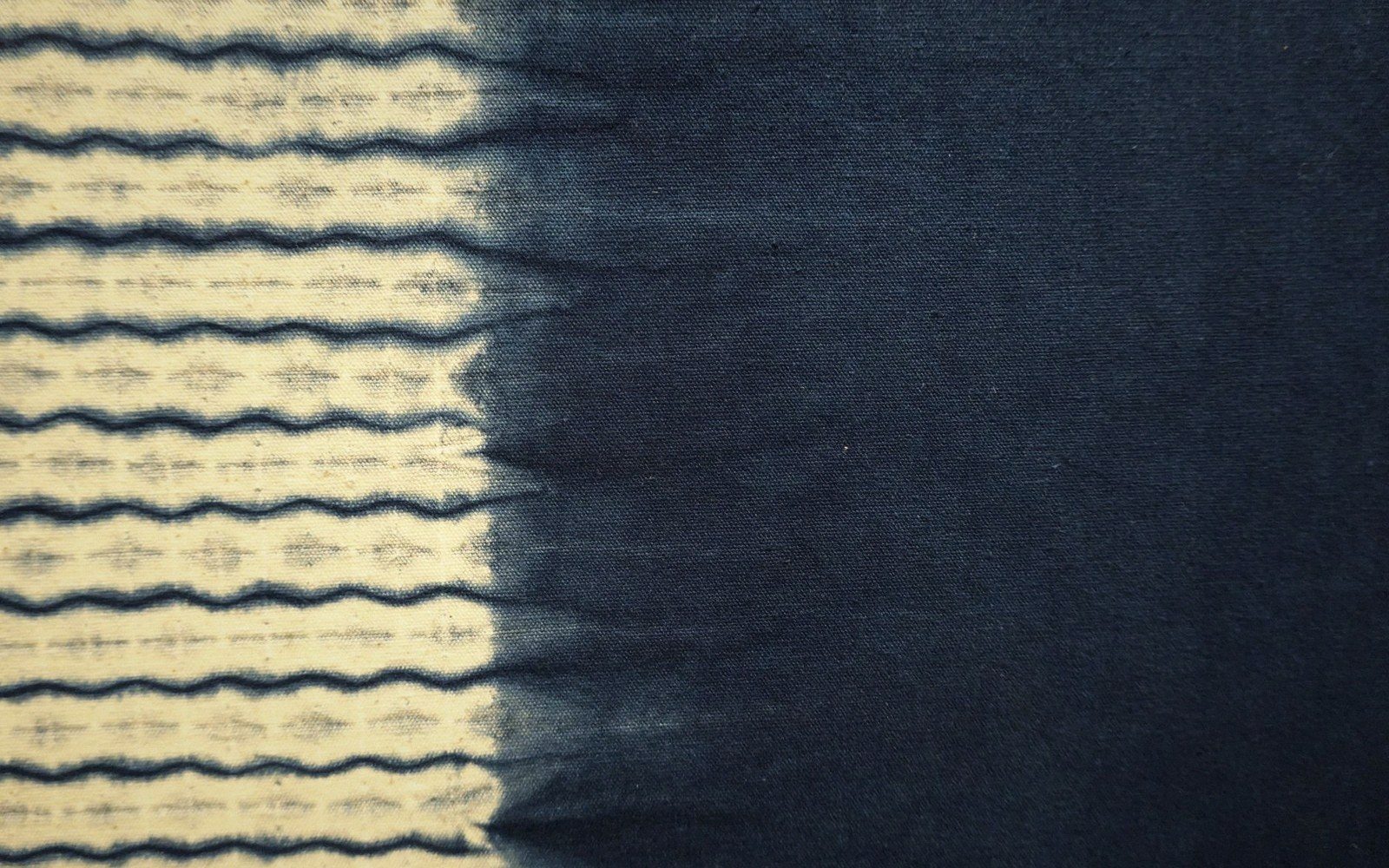
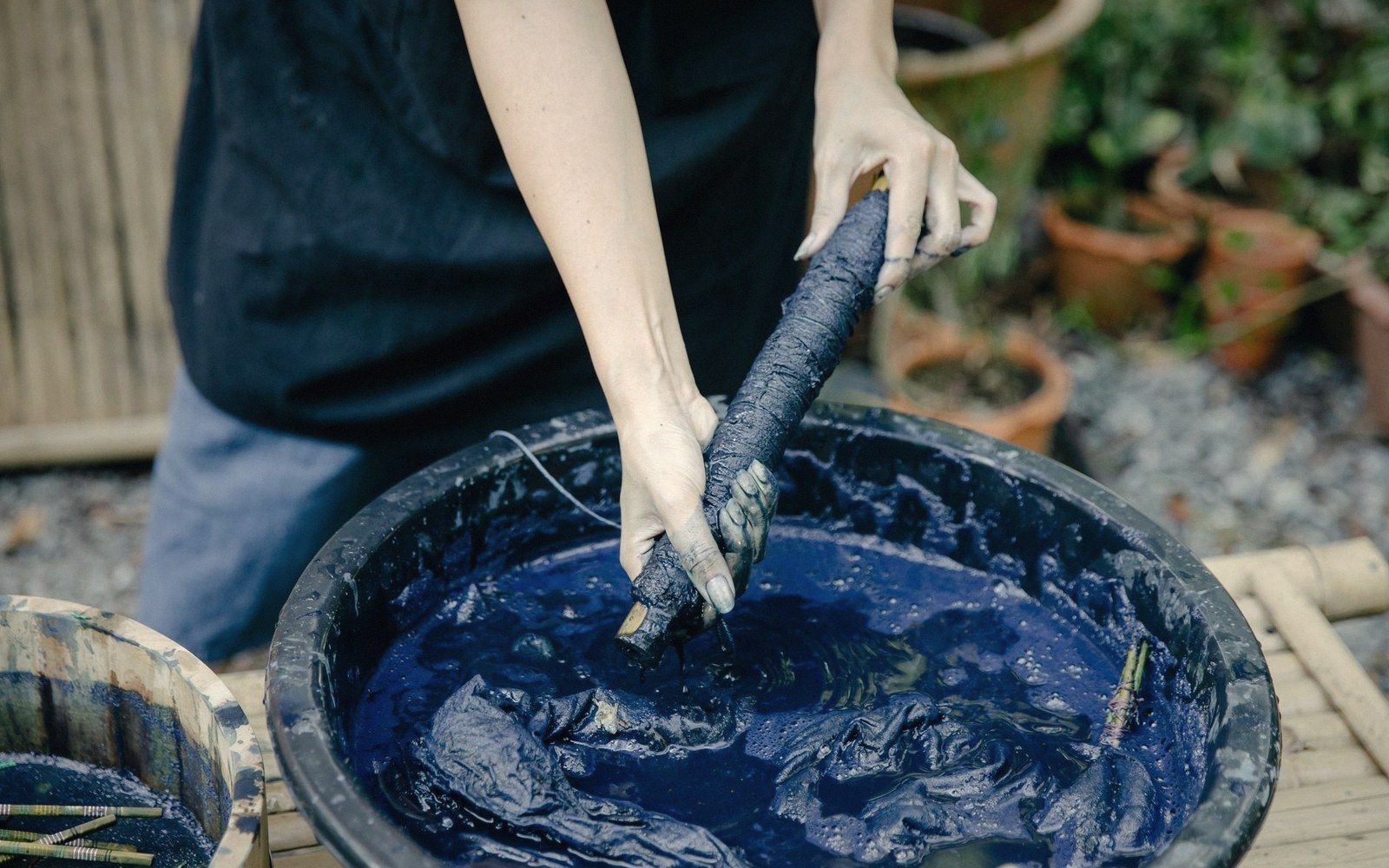
The dye plants themselves are geographically specific. Madder root grows in cooler, drier regions; indigo (Indigofera tinctoria) was cultivated across Rajasthan, Gujarat, Bengal and the Deccan before synthetic indigo collapsed the trade in the early twentieth century. Indigo behaves differently from madder: it is a vat dye, not a mordant dye, and fixes to the cloth through oxidation after the reduced, soluble dye is taken up, rather than through a chemical bond to a mordant. A printer working with both indigo and madder on the same cloth is working with two entirely different chemical systems, and the sequencing — which comes first — matters to the final result.
Pomegranate rind (Punica granatum), myrobalan (Terminalia chebula, called harad in Hindi), and tannin-rich galls all serve as tannin mordants or pre-mordants, particularly on cotton, which bonds poorly to dyes without a preparatory stage. Myrobalan is widely used as an initial soak: the cloth is steeped in a cold myrobalan bath before any printed mordant is applied, giving the fibre a baseline receptivity. In the ajrakh tradition of Kachchh, this preparatory chemistry runs to multiple stages — resist, mordant, wash and dye cycles repeated in sequence — and myrobalan appears early in that sequence precisely because it opens the cotton to what comes after.
01What the mordant does to colour
Iron does more than shift red to black. It saddens and deepens any colour it touches — turning yellows to olive, blues toward green-black, reds to purple-brown. This saddening effect can be a problem if iron-heavy water contaminates a mordant intended to be neutral, which is why printers in regions with iron-rich groundwater compensate carefully during cloth preparation. Alum, by contrast, brightens and clarifies: it is the mordant of choice where a clean red or warm yellow is wanted. Tin mordants, used more in European dyeing than in Indian traditions, produce an intensified scarlet from madder; Indian practice generally achieves its brightest reds through alum quality and dye concentration rather than tin.
The yellow dye plants — pomegranate rind, turmeric (Curcuma longa), tesu flowers (Butea monosperma) — are largely substantive dyes that fix without heavy mordanting, but they vary in lightfastness. Turmeric gives a vivid initial yellow that fades readily in sunlight; tesu is somewhat more stable; pomegranate rind, combined with alum, produces the deep warm yellow seen in finer printed work where permanence matters. The difference between a colour that survives daily use and one that fades in a season is almost always traceable to which plant was used and how it was fixed.
The printer's knowledge, then, is not only botanical but sequential and chemical: which plant, which mordant, which order, which water. The colour on the finished cloth is the sum of decisions made long before the dye bath.
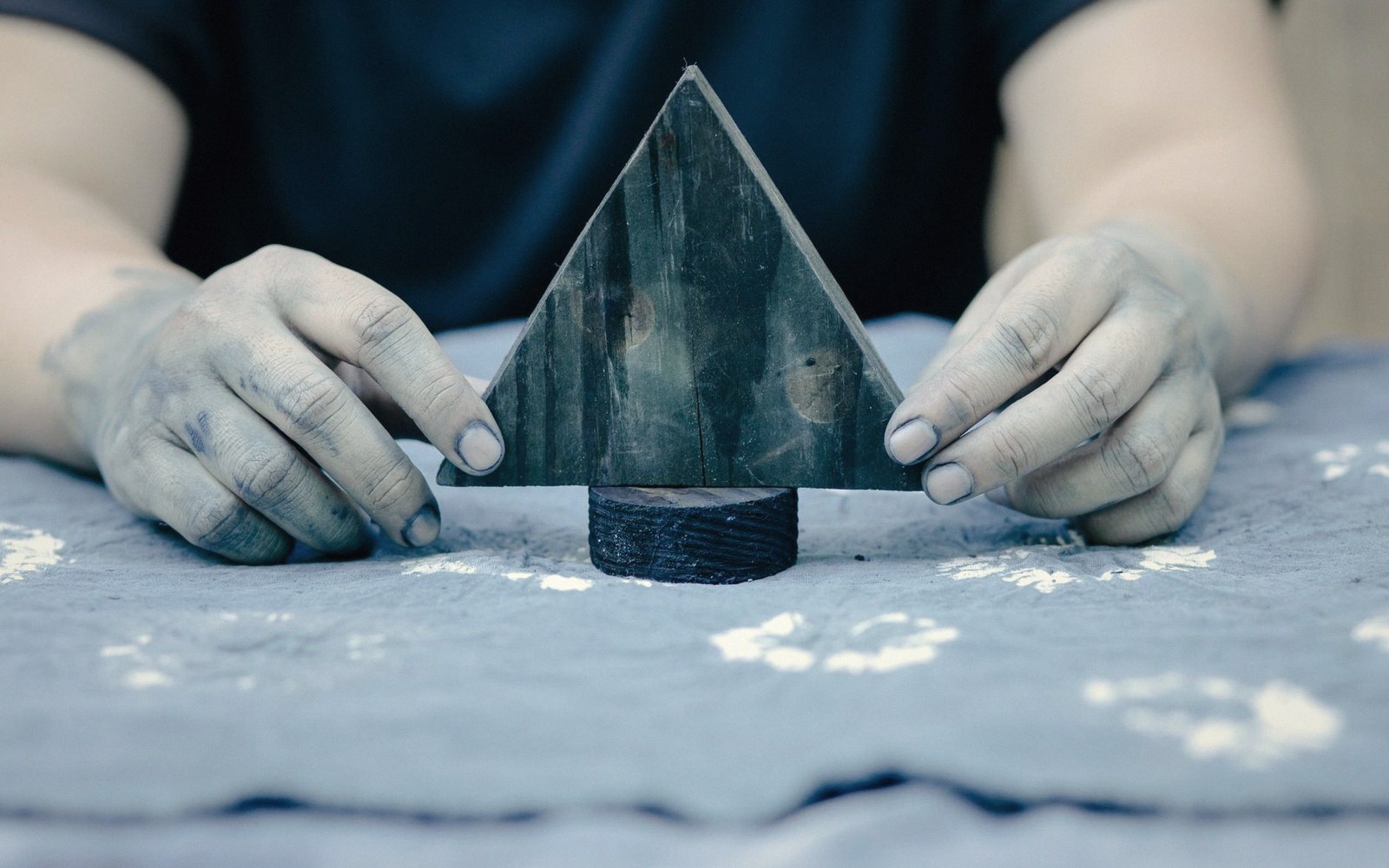
It saddens and deepens any colour it touches — turning yellows to olive, blues toward green-black, reds to purple-brown.