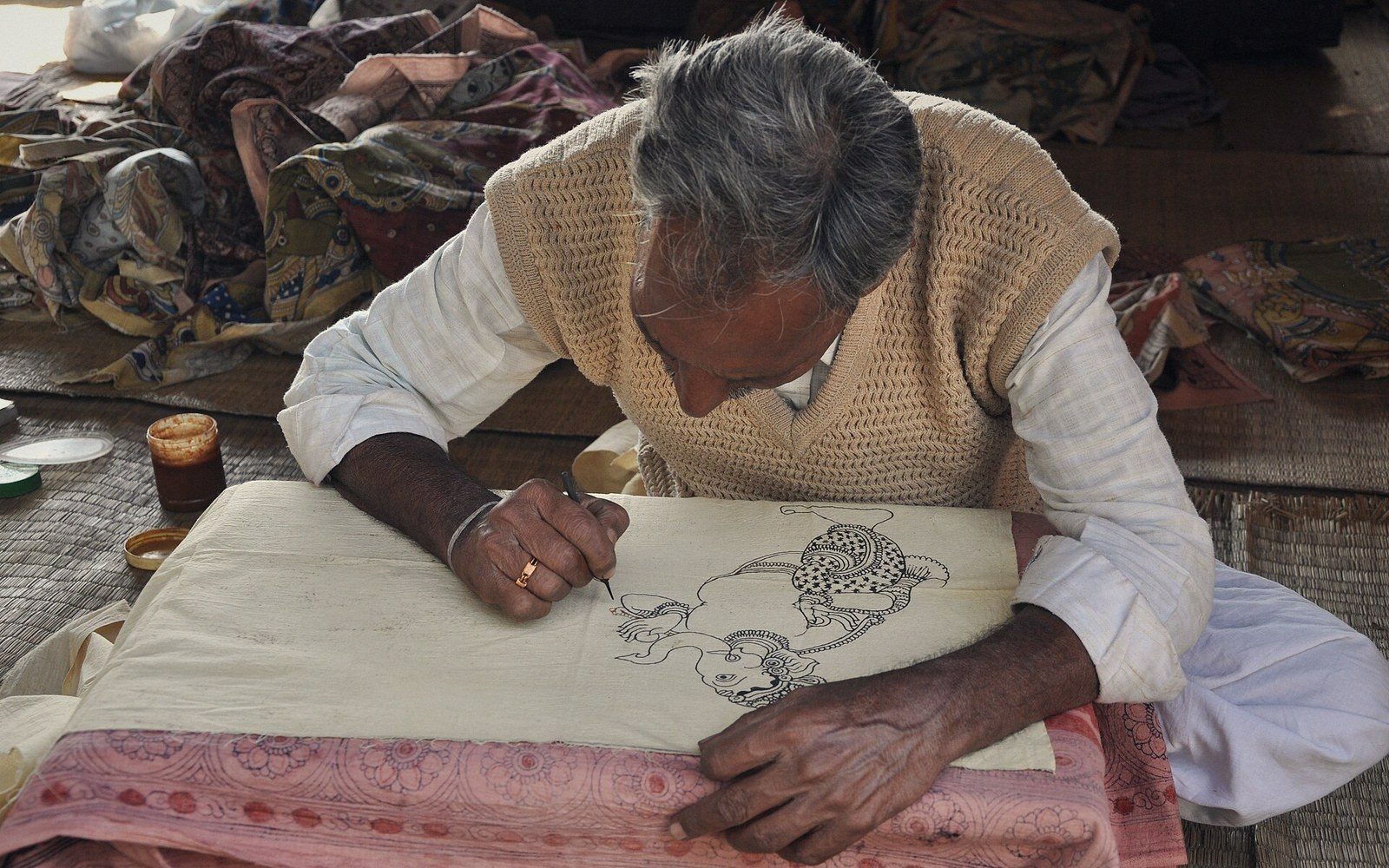
A bamboo pen, fermented water, and a line that cannot be corrected.
Kalamkari — from kalam (pen) and kari (work) — names two distinct traditions that share a name but almost nothing else. The block-printed version centred on Machilipatnam is one; the drawn work of Srikalahasti, in the Tirupati district of Andhra Pradesh, is the other. At Srikalahasti, every line is made by hand, with a pointed bamboo stylus wrapped in wool or hair to hold liquid, dipped repeatedly into fermented iron-rich water that acts as a mordant-resist. The cloth — washed cotton, treated with a solution of myrobalan and buffalo milk — takes the mark directly. There is no block, no repeat, and no correction.
The imagery at Srikalahasti is overwhelmingly religious: episodes from the Ramayana, the Mahabharata, and the Puranas drawn in continuous narrative panels, with strong figural outlines filled using alum and iron mordants that fix different colours — alizarin red from madder root, black from iron liquor, yellow from pomegranate rind or turmeric. Colours are built in stages: outline first, mordants next, then successive dye baths with rinsing between each. The process can take weeks for a single large piece.
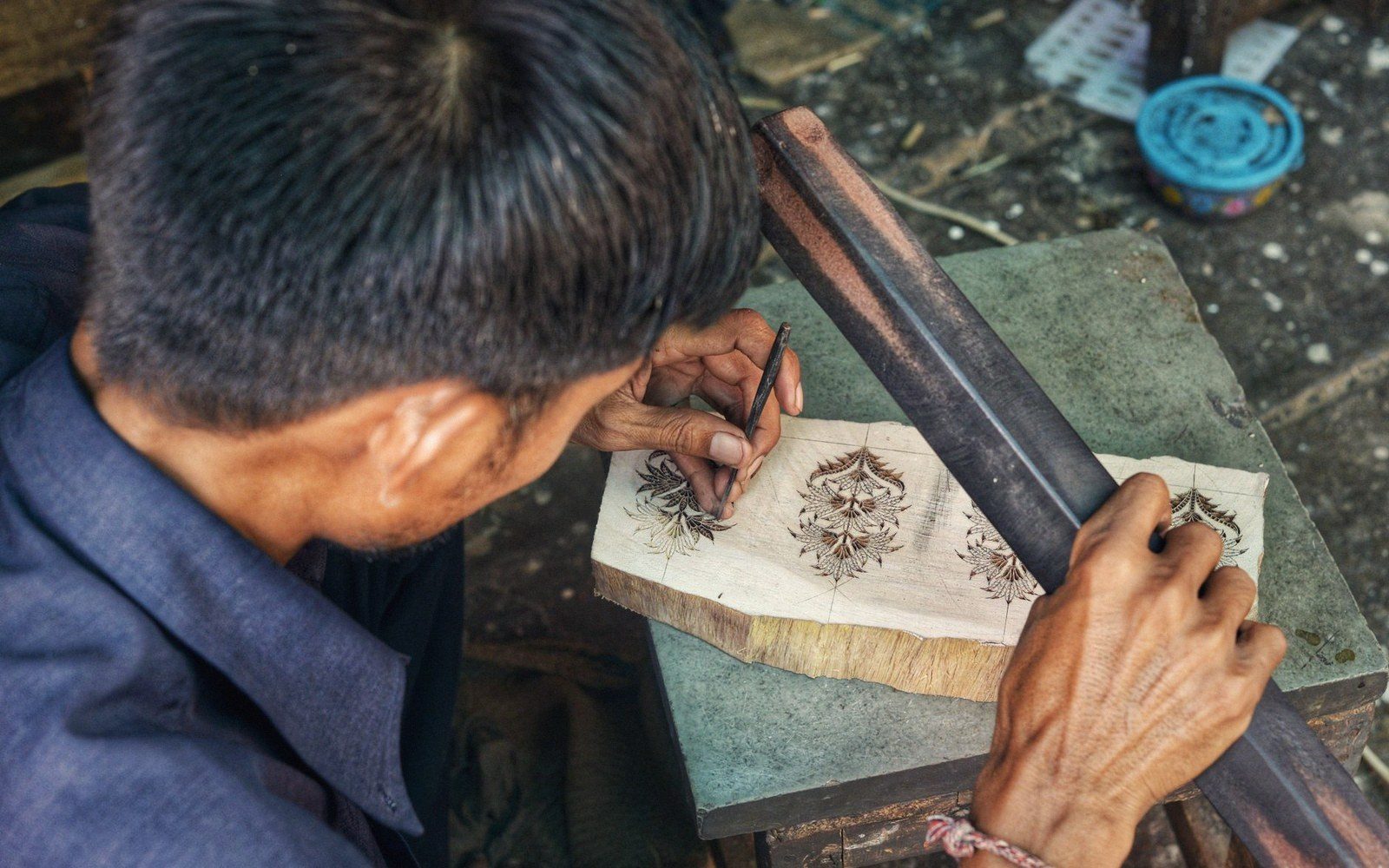
The tradition was historically tied to temple use — large narrative temple hangings and pichhavai-style panels produced for shrines and processional contexts around the Sri Kalahasteeswara temple. Patronage declined under colonial rule and nearly collapsed in the twentieth century, kept alive by only a handful of families. A revival driven partly by national craft institutions from the 1950s onward brought training, documentation and market access, though the cluster of working practitioners remains small and concentrated in and around the Srikalahasti town itself.
What distinguishes the work visually is a quality of line impossible to replicate by block: the slight variation in pressure, the taper at a curve's end, the speed of a confident stroke. The pen leaves evidence of a decision.
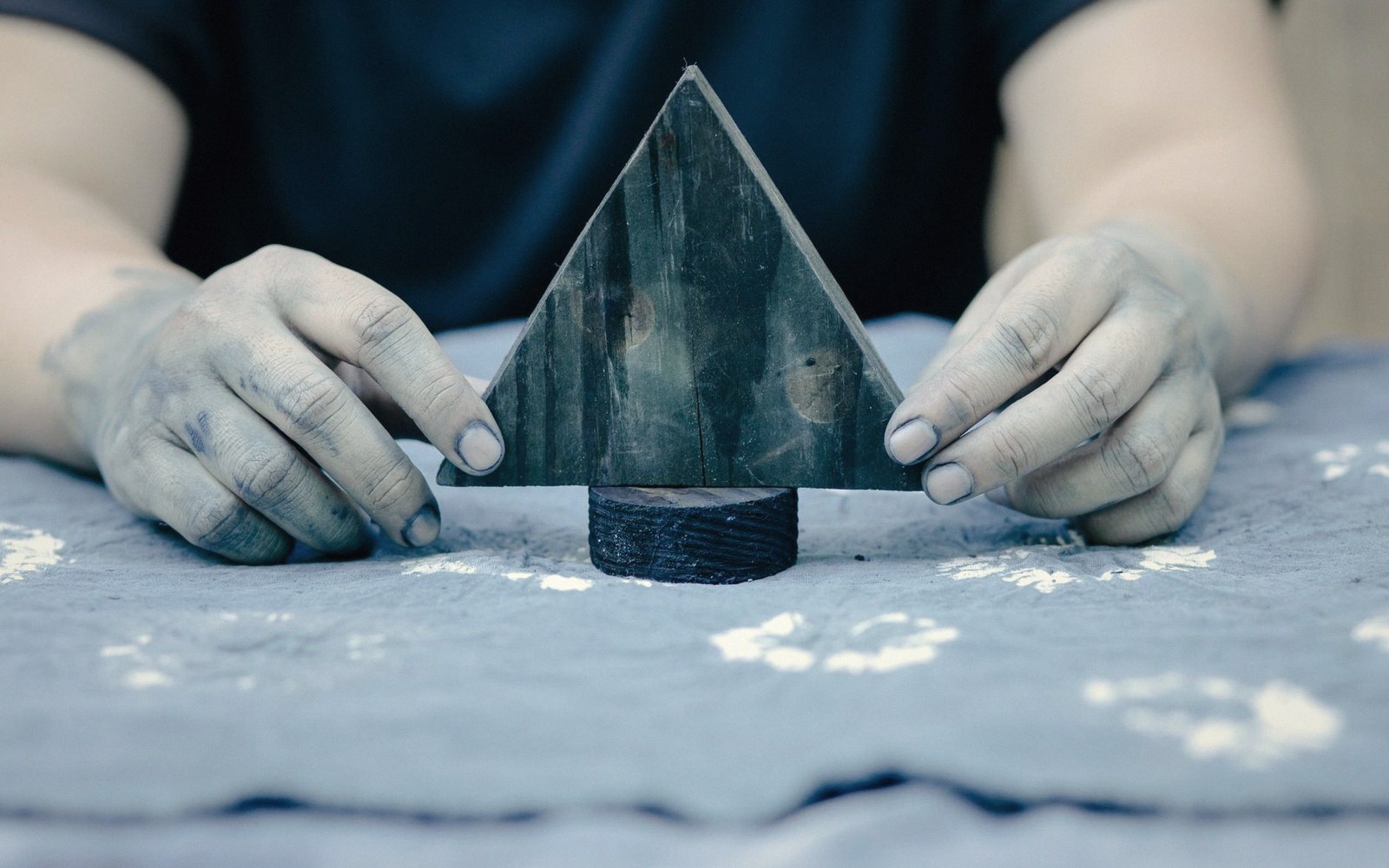
The cloth — washed cotton, treated with a solution of myrobalan and buffalo milk — takes the mark directly.