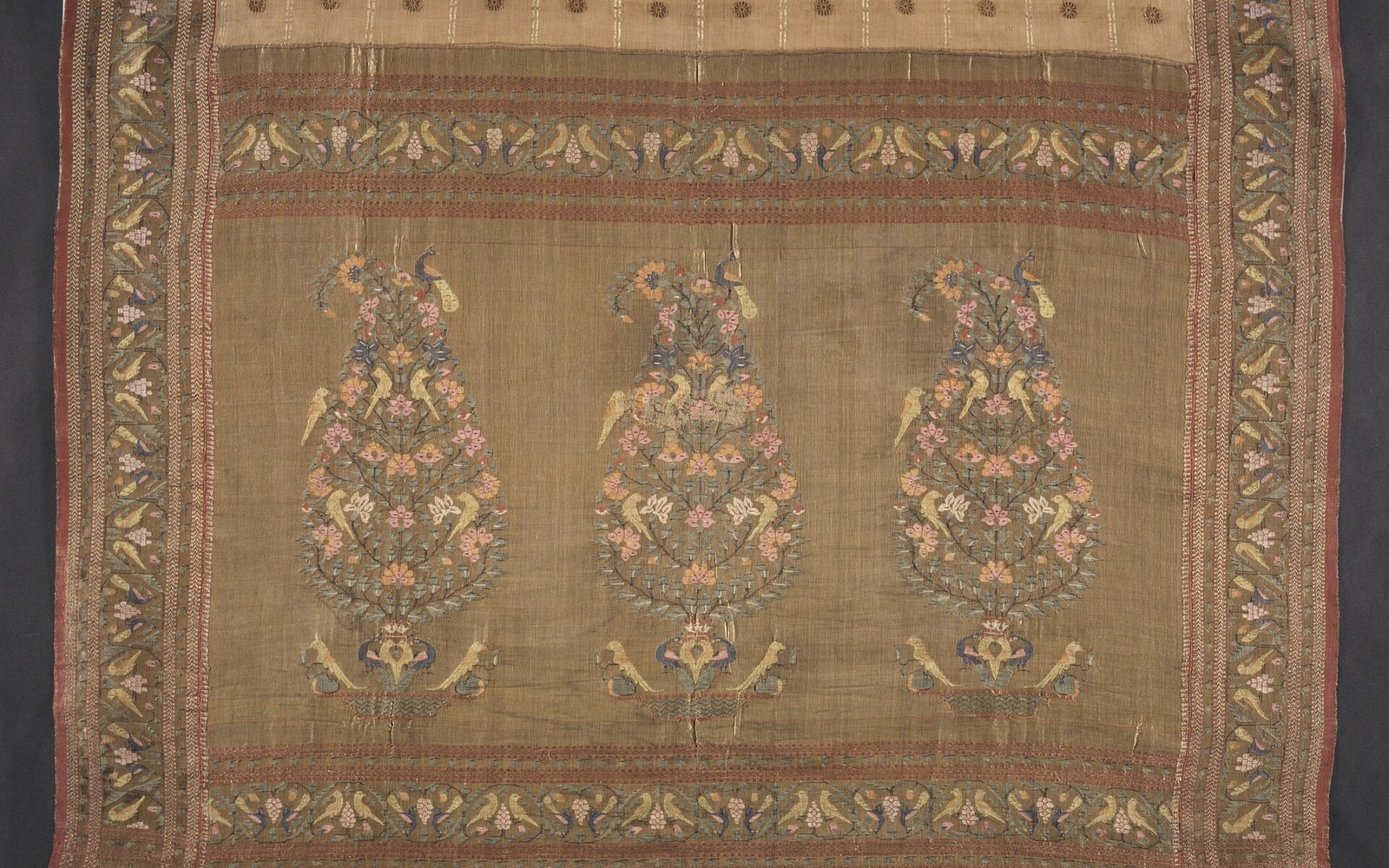
The word pashmina comes from the Persian pashm, meaning wool, but the fibre it names is not ordinary wool by any measure. It comes from the undercoat of the Changthangi goat, a breed native to the Changthang plateau in Ladakh, grazing at altitudes above four thousand metres where winter temperatures fall far enough to prompt the animal's body to grow an inner fleece of exceptional fineness. That fleece, combed out by hand each spring during the moulting season, is what spinners in the Kashmir Valley have worked with for centuries.
The diameter of the fibre — typically between twelve and sixteen microns — is what sets pashmina apart from merino and most other premium wools, which run to eighteen microns and above. At that fineness, the fibre cannot be processed by industrial spindle without breaking. It must be hand-spun, drafted slowly onto a yinder, the traditional supported spindle used by women in Kashmiri homes. The spun yarn is then washed in rice water to strengthen it before weaving. No stage of this is fast, and no machine has yet replaced the spinner's hands at the drafting stage without compromising the thread.
01From loom to pattern
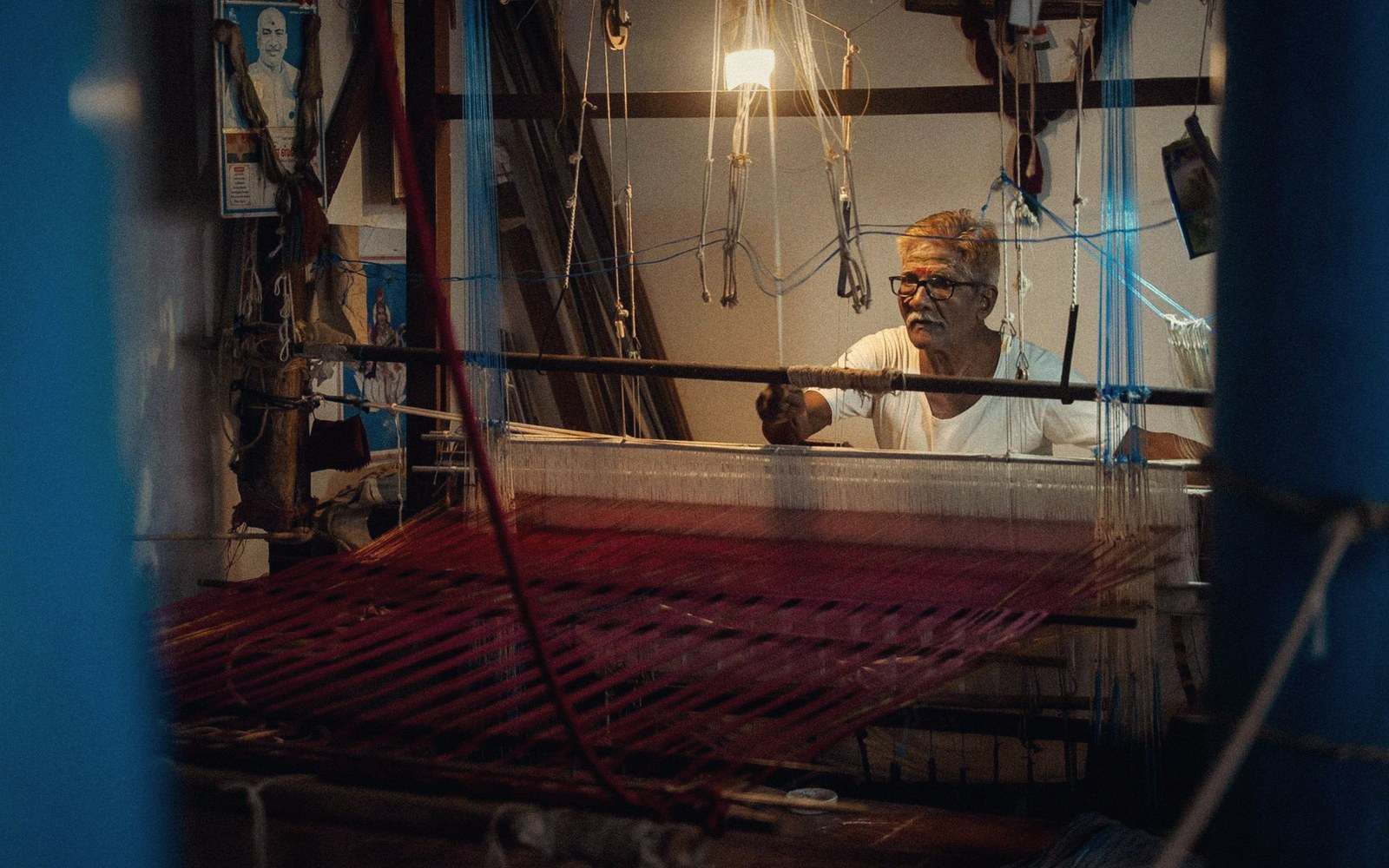
Weaving takes place on a simple pit loom strung with the spun yarn as weft through a silk warp, which provides tensile strength the pashmina alone cannot supply. The Kashmir shawl as a finished object has a distinct architecture: a plainweave or twill ground, and a patterned border or field woven in the kani technique, in which small wooden spools — kanis — carry individual colour threads across sections of the weft rather than the full width of the cloth. A weaver manipulates dozens of these spools simultaneously, working from a colour-coded pattern notation called a talim, read aloud by a second person or memorised. Complex figured shawls can take months or years to complete on a single piece.
The kani shawl tradition is centred on Kanihama, a village outside Srinagar, and in the workshops of the wider Valley. Its design vocabulary — the buta (a single leaf or floral motif), the pashmina jamawar (an all-over pattern of repeated flowering plants), and the familiar paisley or boteh that European manufacturers later reproduced by machine — evolved over several centuries of court patronage, beginning under the Mughal emperors and intensifying under Afghan and then Sikh rule of Kashmir. Each successive court brought its own taste; the Mughal period is associated with naturalistic flowering-plant designs derived from Persian garden imagery, while the later period shows denser patterning and more saturated dye.
By the early nineteenth century, European demand had transformed the market. Kashmiri shawls entered French and British fashion as luxury imports, and manufacturers in Paisley, Lyon and Norwich began producing power-loom imitations. These were cheaper and faster but required the design to be flattened and regularised, which is why the boteh became rigid and iconic rather than fluid. The originals remained distinct — softer, warmer, lighter, and irrefutably hand-made.
02What the fibre tells you
Authentic pashmina has a warmth-to-weight ratio that synthetic and machine-processed alternatives cannot match, because the fineness of the fibre creates a very high proportion of trapped air per gram of material. A full-length shawl of genuine hand-spun, hand-woven pashmina weighs very little and yet holds warmth. The test is tactile more than visual: the cloth is almost weightless against the palm and billows rather than drapes when shaken.
The trade carries a persistent problem of adulteration — shahtush, the far rarer fibre of the Tibetan antelope, was once blended or substituted until international wildlife protection law made its trade illegal. Pashmina itself is sometimes blended with cotton or viscose to reduce cost. Genuine kani-woven pashmina is authenticated in part by its talim-derived pattern complexity, the irregularities visible under magnification that identify hand-spun yarn, and the reputation of the workshop producing it. The Geographical Indication tag issued for Kashmir Pashmina names both the fibre source and the weaving region, and the Craft Development Institute in Srinagar has worked to document production standards — though enforcement across a diffuse cottage industry remains genuinely difficult.
At that fineness, the fibre cannot be processed by industrial spindle without breaking.