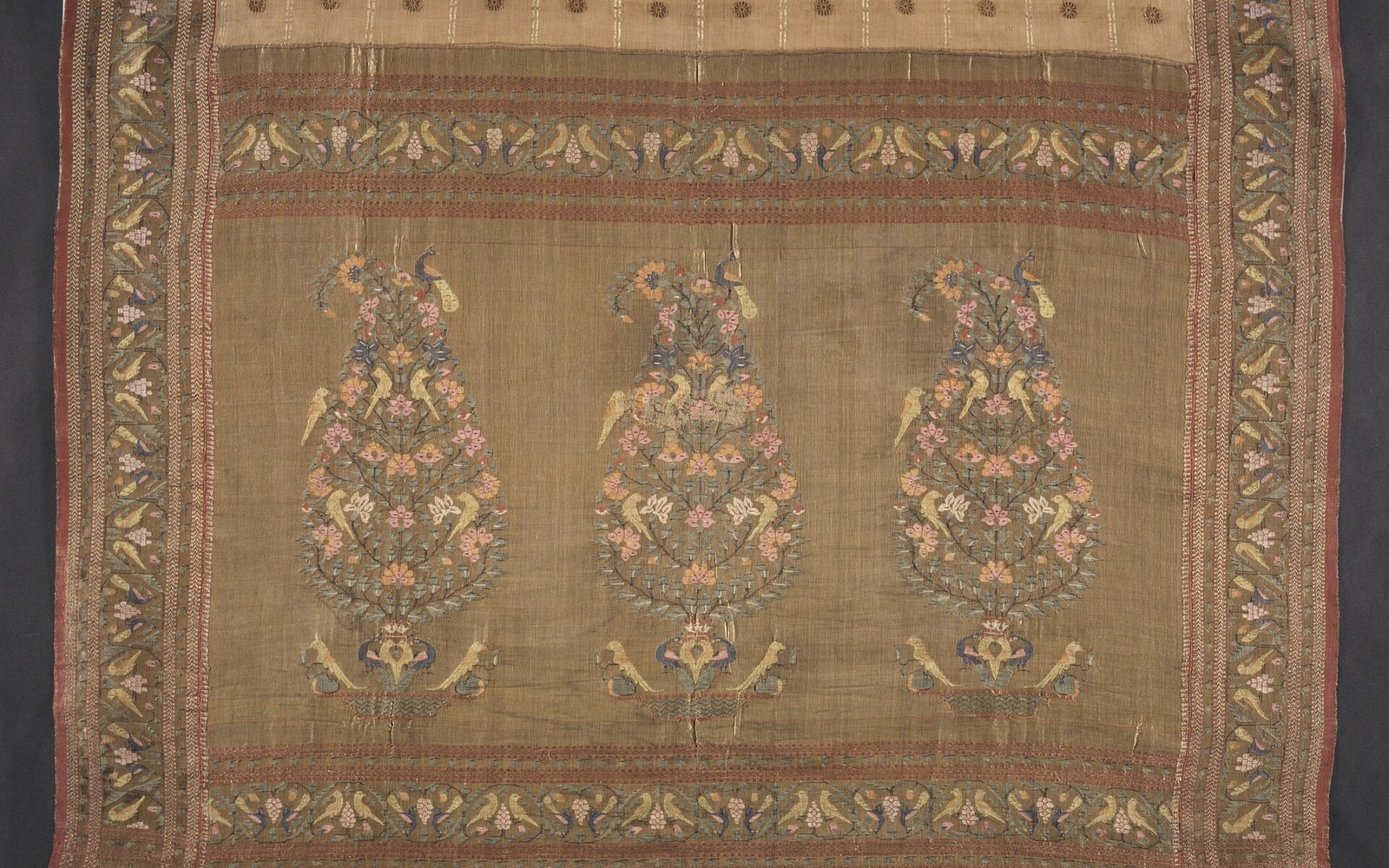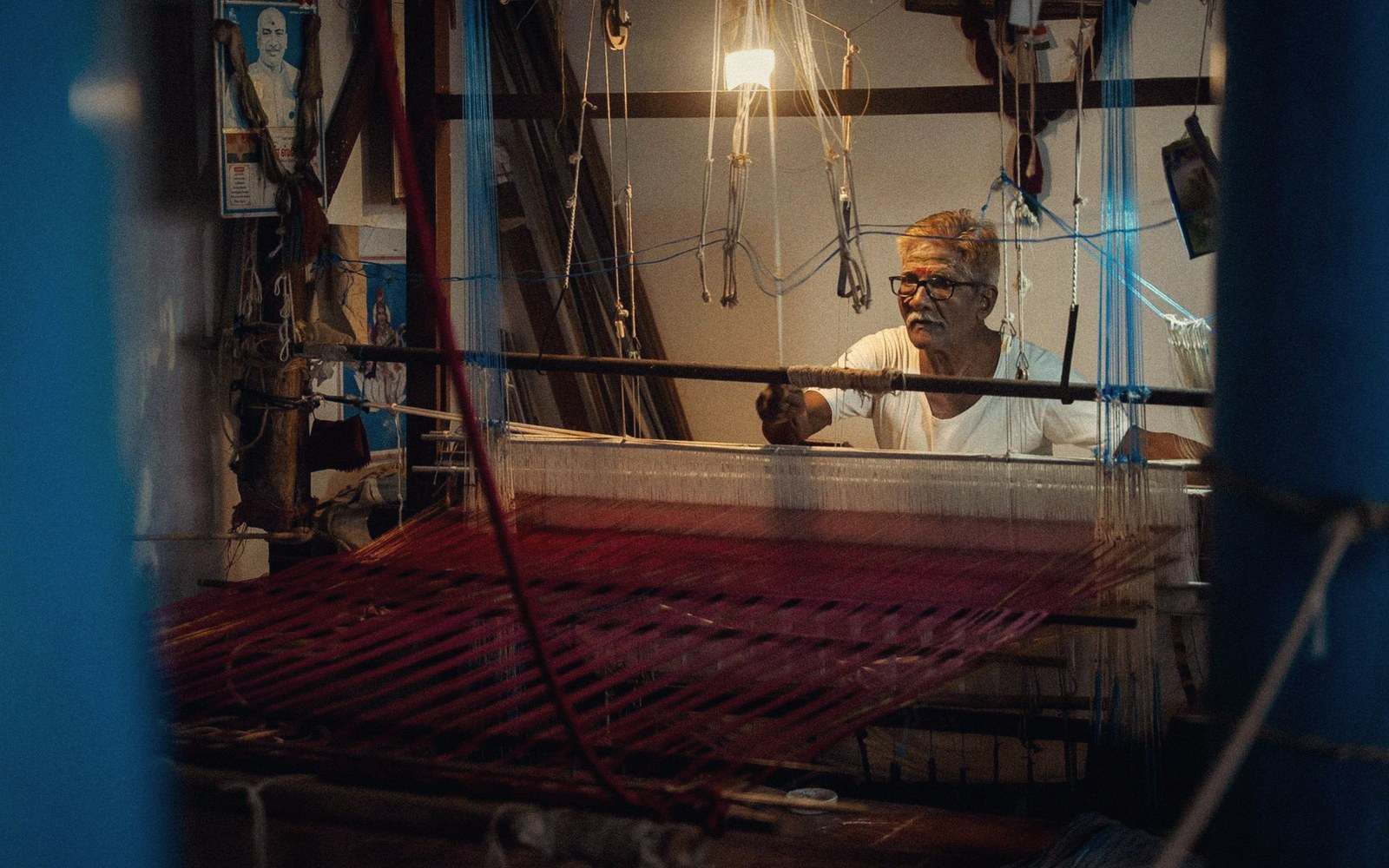
Brocade is not embroidery. The metal thread is not stitched onto a ground fabric after the fact — it is built into the cloth as it is woven, interlacing with the weft at precisely the point where the pattern demands it and lying loose on the back where it does not. That distinction matters: the pattern and the structure of the cloth are the same event.
The technique has been worked in Varanasi — historically called Banaras — for several centuries, though precisely when metal thread weaving arrived in the city is debated. What is clear is that by the Mughal period the city was already the dominant centre for this work in northern India, and that Mughal patronage, with its appetite for gold-thread cloth in ceremonial dress and court furnishing, accelerated both the refinement of the technique and the elaboration of its patterns.
01How the thread works
The metal thread used in Varanasi brocade is called zari. It is not solid gold or silver but a fine strip of metal — traditionally a flattened wire of real silver, often gilded — wound in a tight spiral around a silk or cotton core. What makes the thread workable on a loom is the core: the metal itself cannot be passed through a shed the way a fibre yarn can, so the spiral winding around a flexible carrier does that work for it. The resulting thread has a characteristic surface shimmer, slightly textured from the spiral, and a warmth that flat metallic film cannot replicate.
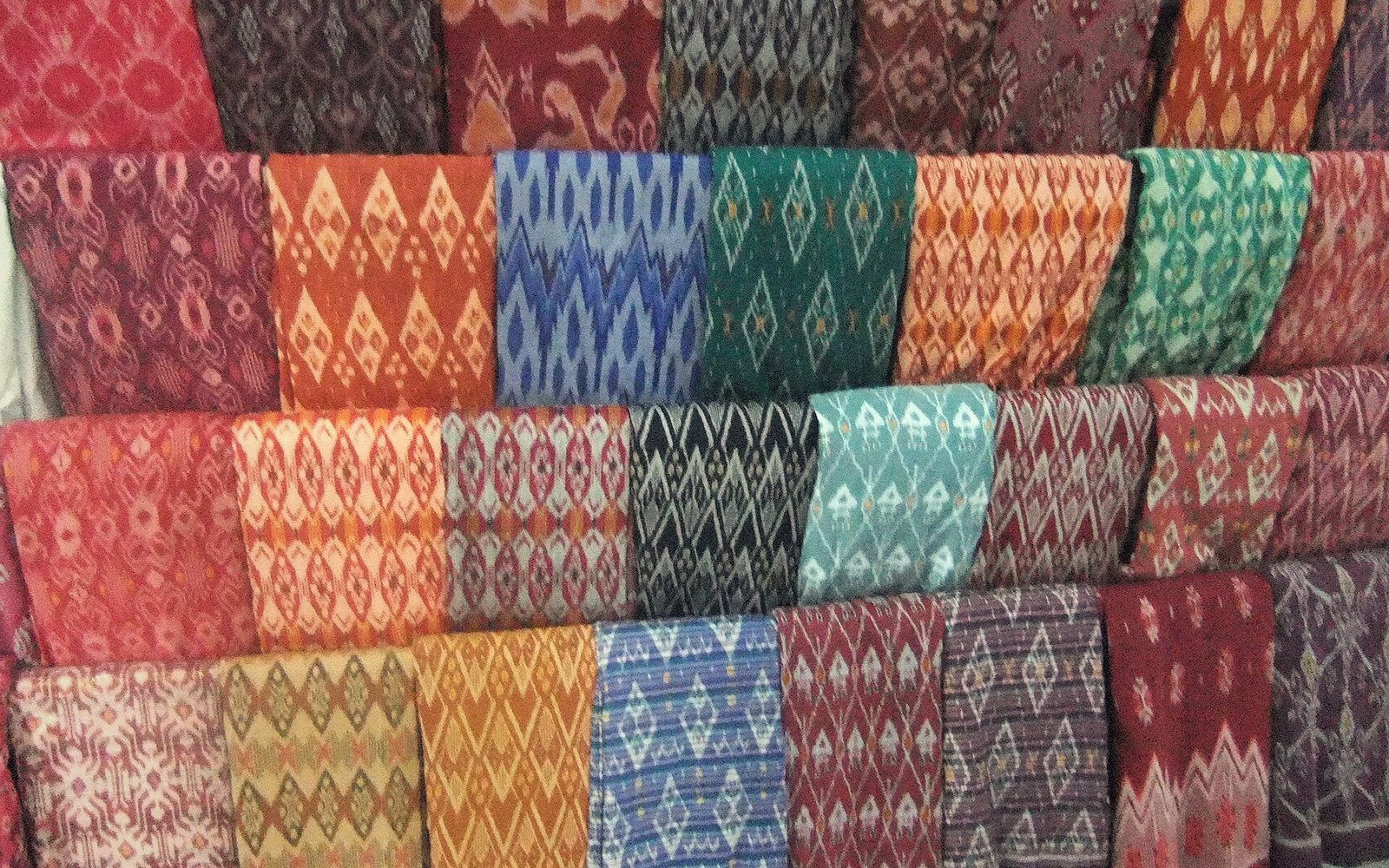
The weave structure used for most Varanasi brocade is a figured silk ground — typically a satin or twill — into which the supplementary zari weft is introduced only where the pattern requires it. Where the gold thread is not needed, it floats across the back of the cloth, cut or carried. When cut between pattern areas, the technique is called katwa — the thread is clipped and the motif sits as a discrete inlay. When carried, the back of the cloth shows continuous floats running wall to wall. Weavers and buyers read these backs to understand the structure; the carried version uses more metal, which is one reason the cloth is heavier and more expensive.
The loom used is a Jacquard-equipped pit loom, worked by a weaver and an assistant. The Jacquard mechanism — introduced in Varanasi by the early twentieth century — selects which warp threads are raised for each pass of the shuttle, enabling complex repeating figuration without the weaver reading a draft for every row. Before the Jacquard, this selection was done by a nakshaband, a pattern-tier who knotted cords to program the figure into what was effectively a hand-operated drawloom. The vocabulary of motifs that the nakshaband refined — the kalga (a stylised floral plume descended from the Mughal boteh), the jangla (a dense foliate field), the butidar (scattered small motifs on an open ground) — is what the Jacquard now executes.
Varanasi brocade is broadly categorised by the weight of metal thread and the ground weave. Kimkhwab is the heaviest, a cloth so dense with zari that the silk ground is barely visible — historically made for ceremonial and royal use. Tissue is the opposite: a sheer silk with a light zari stripe or scattered figure, worn by women as a sari where luminosity rather than weight is the effect. Between them sits the tanchoi, a figured silk with little or no metal thread, its pattern carried entirely in coloured silk wefts — technically brocade in structure if not in material, and often grouped with it in the trade.
The fabric is made in neighbourhood workshops across the weaving districts of Varanasi, particularly in areas like Madanpura and Alaipura. Production is organised by master weavers who typically hold the Jacquard cards, supply yarn and zari, and buy back the finished cloth. The weavers — many from families who have worked the pit loom for generations — own the loom itself, often installed in the house. That structure, in which the capital and the pattern belong to one party and the skill and the machine to another, has remained broadly stable for a very long time.
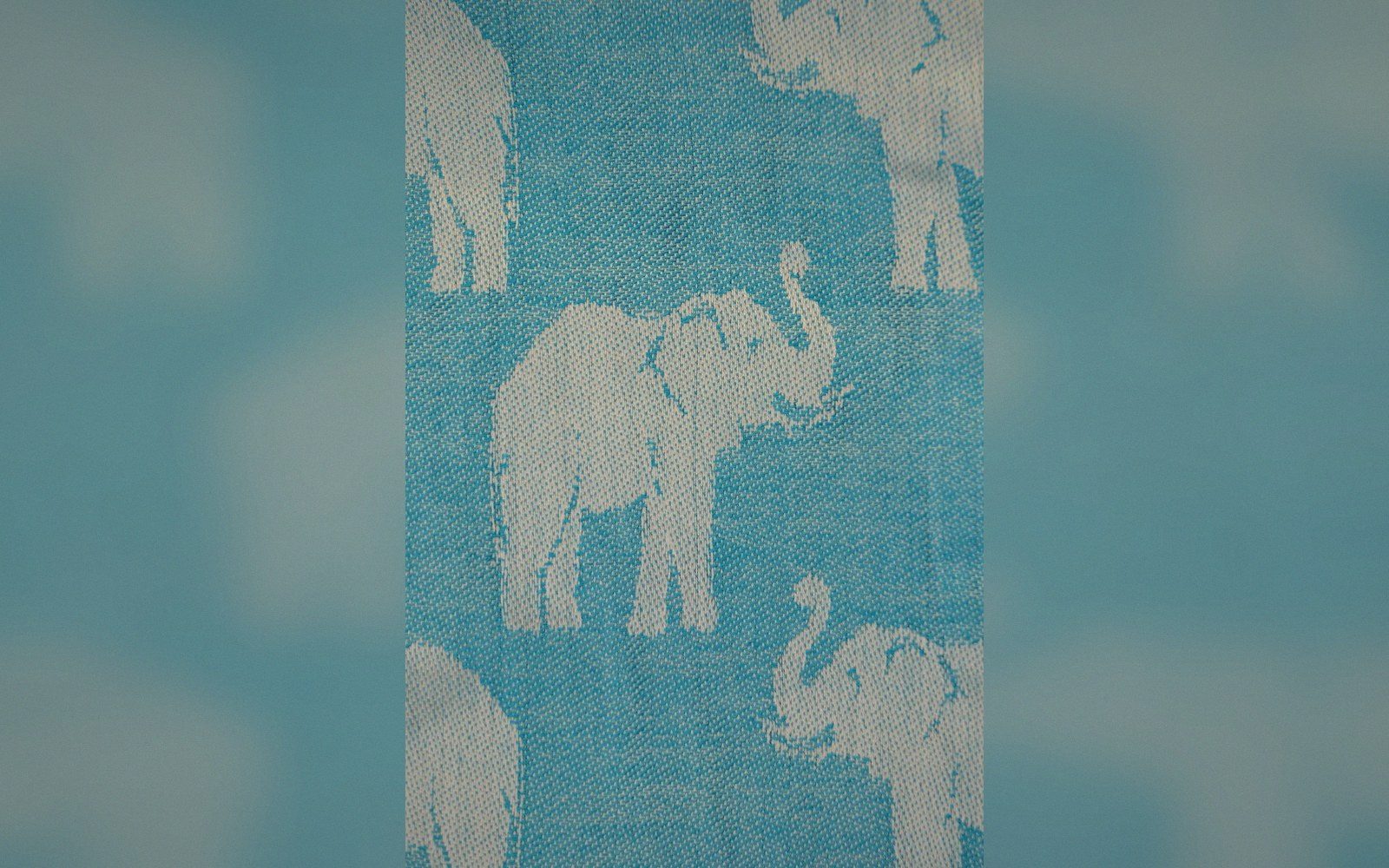
Where the gold thread is not needed, it floats across the back of the cloth, cut or carried.