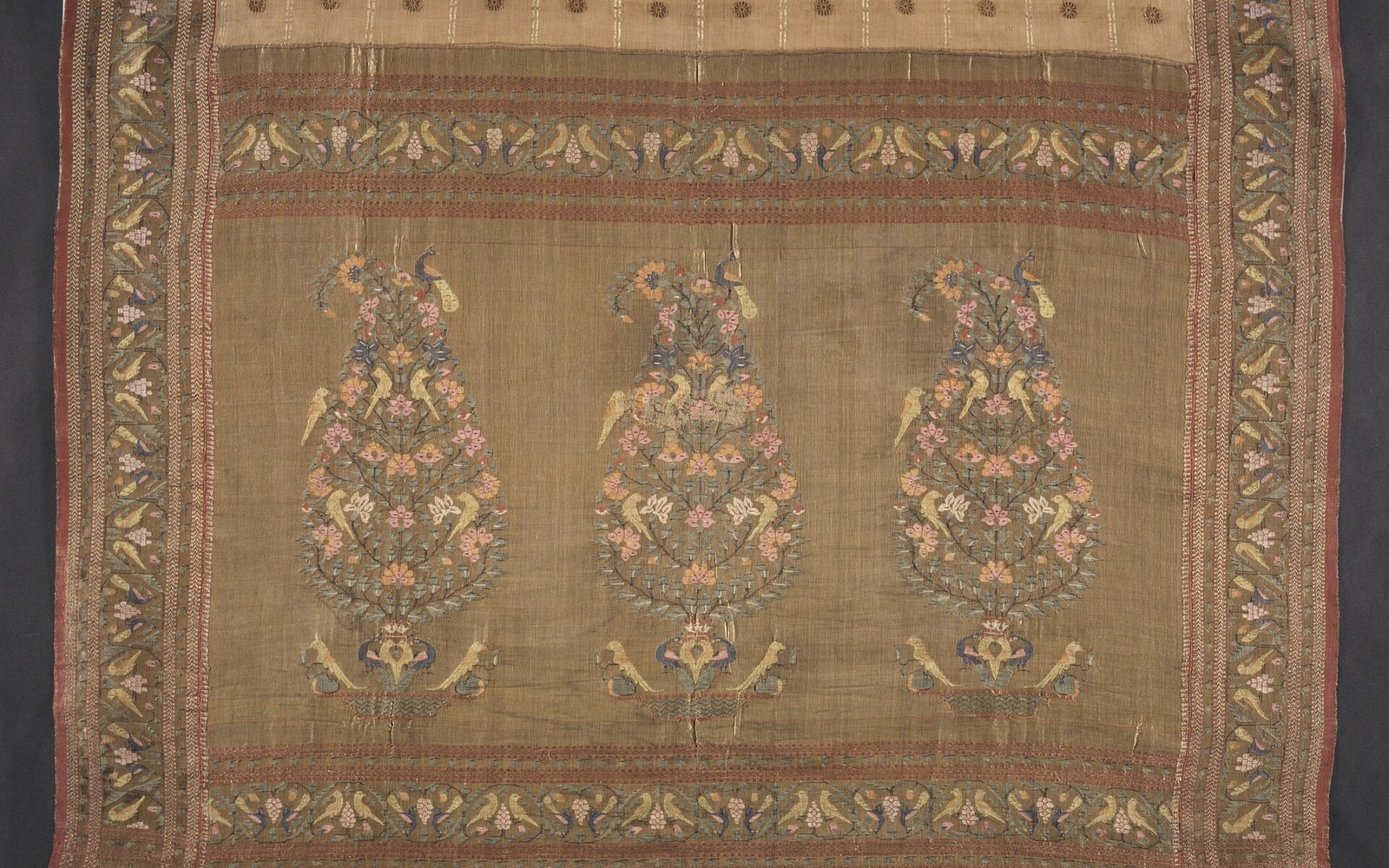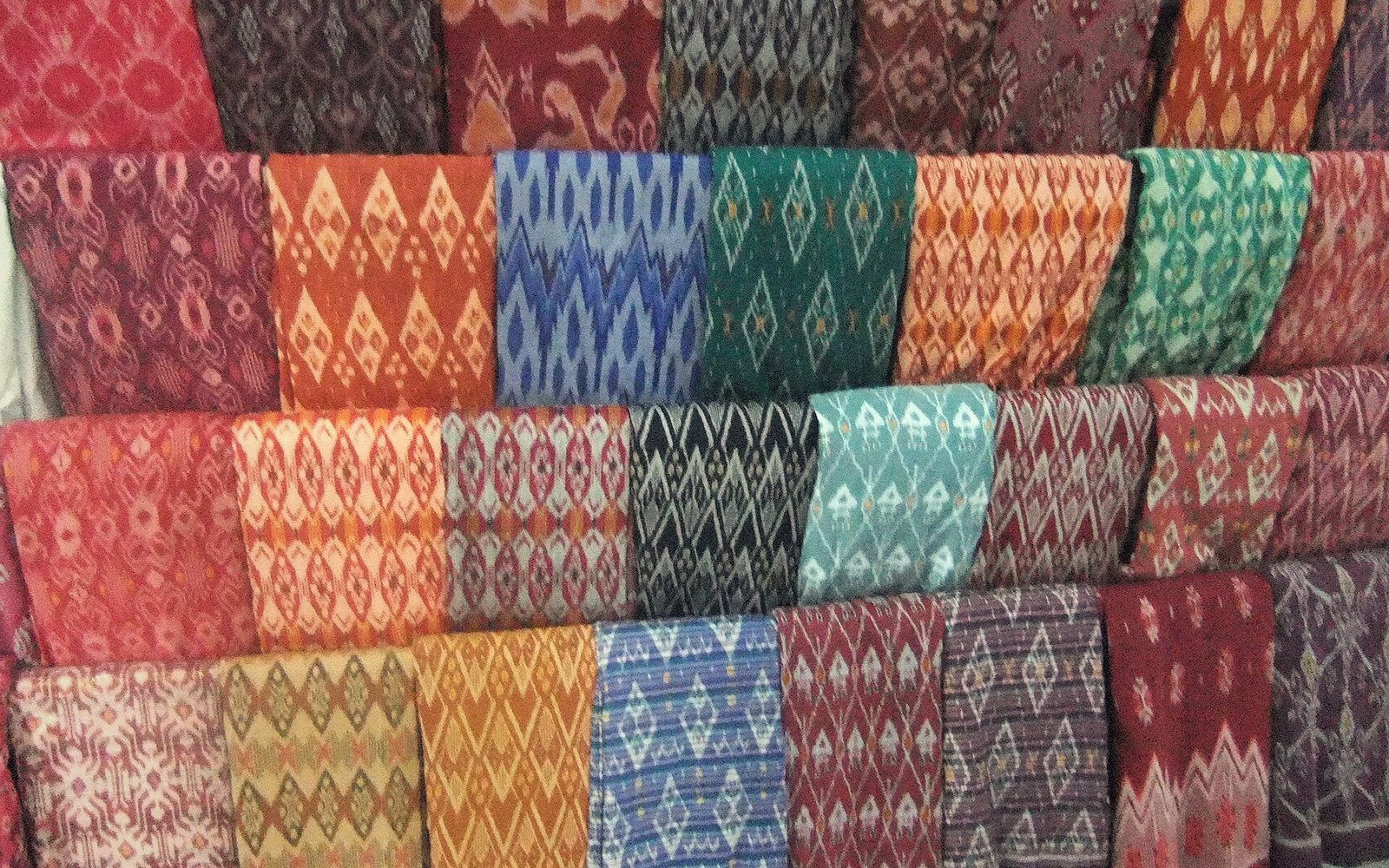
The colour goes in before the thread is woven — which means the pattern must be calculated before the cloth exists.
Ikat is a resist-dyeing process applied to yarn rather than cloth. Selected sections of the thread are bound tightly — with cotton or rubber — before dyeing, so the bound areas resist the bath and emerge undyed. Unbind, rebind in different configurations, dye again in a second colour, and the sequence builds up a patterned thread. When that thread is finally woven, the pattern appears in the cloth. The word itself, from the Malay mengikat (to tie or bind), arrived through Dutch trading records, but the technique is far older than any of those trade routes and present across Asia, Central America and parts of Africa independently.
In India the tradition takes three principal forms. In warp ikat, only the warp threads are resist-dyed; the weft runs plain or in a solid colour, and the pattern is entirely in the vertical axis of the cloth. In weft ikat, the patterned threads run horizontally across the loom. Both forms exist across Odisha, Andhra Pradesh, Telangana and Gujarat — Odisha's bandha silks, worked in warp and weft ikat, are among the best-known regional expressions.
01Where precision becomes extraordinary
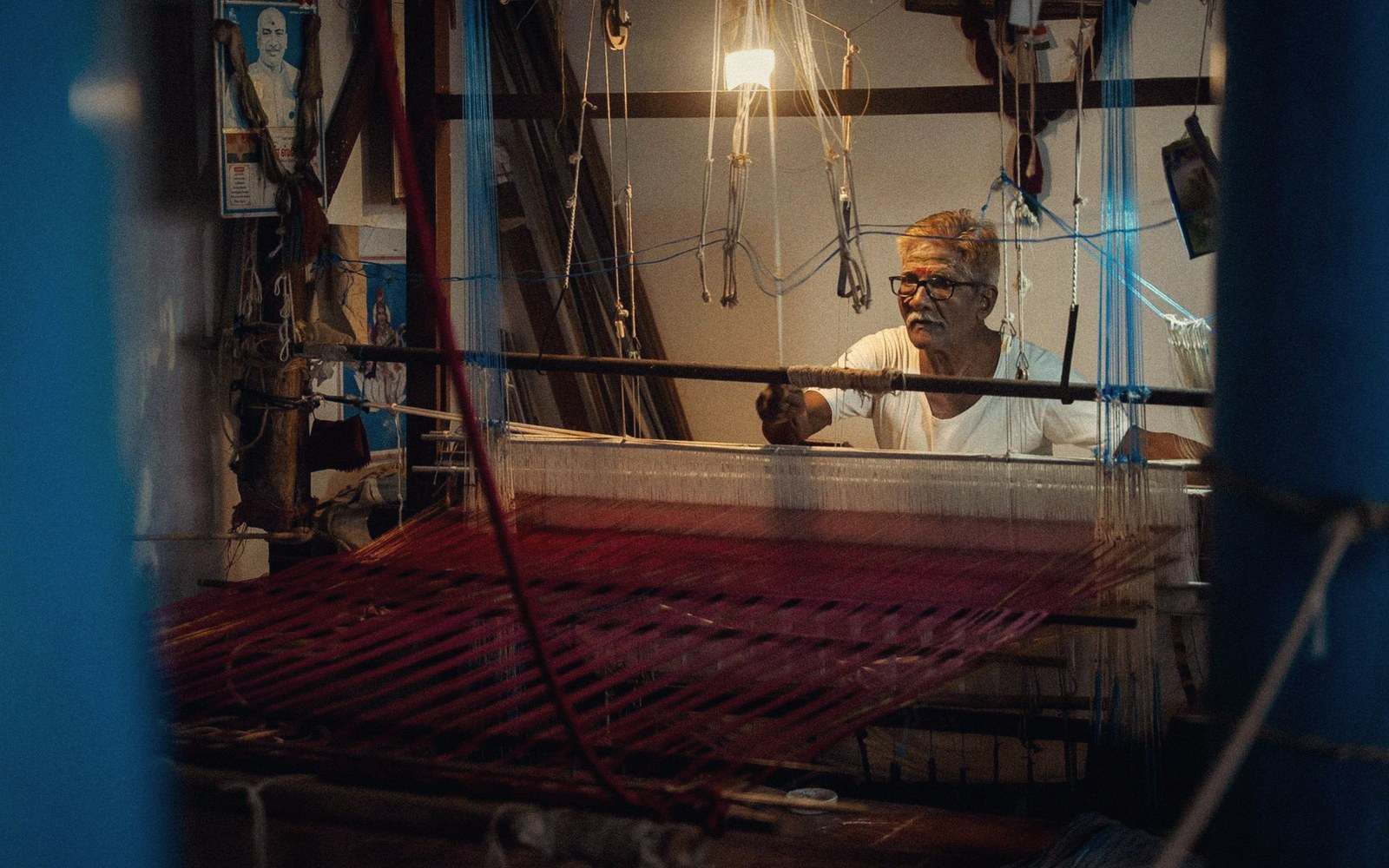
Double ikat is what separates Patan, in northern Gujarat, from almost everywhere else on earth. Here both warp and weft are resist-dyed independently before weaving, and they must register against one another exactly at the intersection of every thread for the pattern to resolve cleanly. The cloth made this way is called patola (singular patolu), and it was for several centuries one of the most commercially and symbolically powerful textiles produced anywhere in Asia.
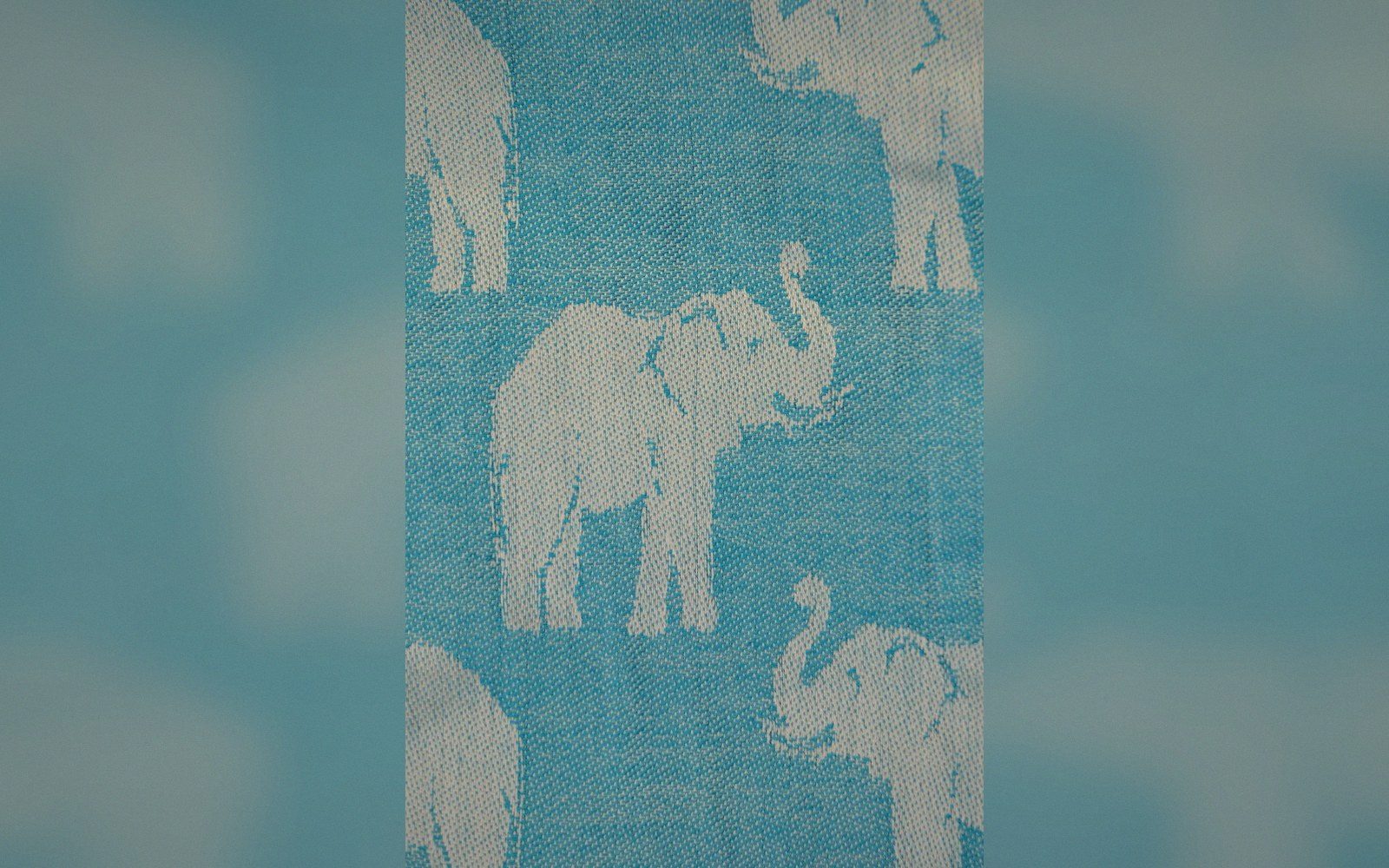
The geometry of this is demanding in a way that is hard to overstate. A Patan patola weaver works the threads in paired groups, calculating across a grid where every individual warp and weft binding position must correspond to the intended design. No correction is possible after dyeing. A miscalculation made in the binding stage surfaces only when the cloth is on the loom. The design vocabulary — stylised flowers, parrots, elephants, the vohra gaji and naari kunjar formats named by the communities who commissioned them — is carried in the memory of the family workshop, worked out on paper grids, and executed by hand without mechanical assistance.
Patan's weaving community, the Salvi families, has maintained the tradition across generations under conditions that include the collapse of historic export markets, the near-death of demand during the colonial period, and the sharp rise in the labour time required relative to any woven substitute. A complete double-ikat patola sari may take months to produce. The cloth's export history ran from medieval Gujarat through the ports of Surat and Cambay to Southeast Asia, where patola patterns were copied in local batik — a reverse migration of design that testifies to how thoroughly the cloth had saturated regional visual culture.
The craft has contracted severely: very few Salvi workshops remain operational in Patan today, and the tradition carries Geographical Indication status under Indian law, restricting the use of the name patola to cloth made there.
02Other Indian ikat regions
Outside Patan, single-ikat traditions remain vigorous. Pochampally, in Telangana, produces geometric warp-and-weft ikat silks and cottons — sometimes called Pochampally ikat or Pochampally silk — that represent a separately evolved tradition with its own design grammar. The bandha of Odisha uses warp and weft ikat in silk and cotton, with a warmer, more painterly edge to the pattern where the dye bleeds slightly at the resist boundary; that soft halo, called feathering in technical descriptions, is considered a mark of quality rather than imprecision. Rajkot in Gujarat produces a weft-ikat silk distinct from Patan's double ikat in both technique and price. Each tradition is geographically protected or regionally identified, and each is worked by communities with specific caste and craft identities tied to the cloth.
What all these share is the fundamental inversion that defines ikat: the pattern is fixed in thread before the cloth is made. The weaver works toward a result that already exists, encoded in bound and dyed yarn, waiting to become visible.
Ikat is a resist-dyeing process applied to yarn rather than cloth.