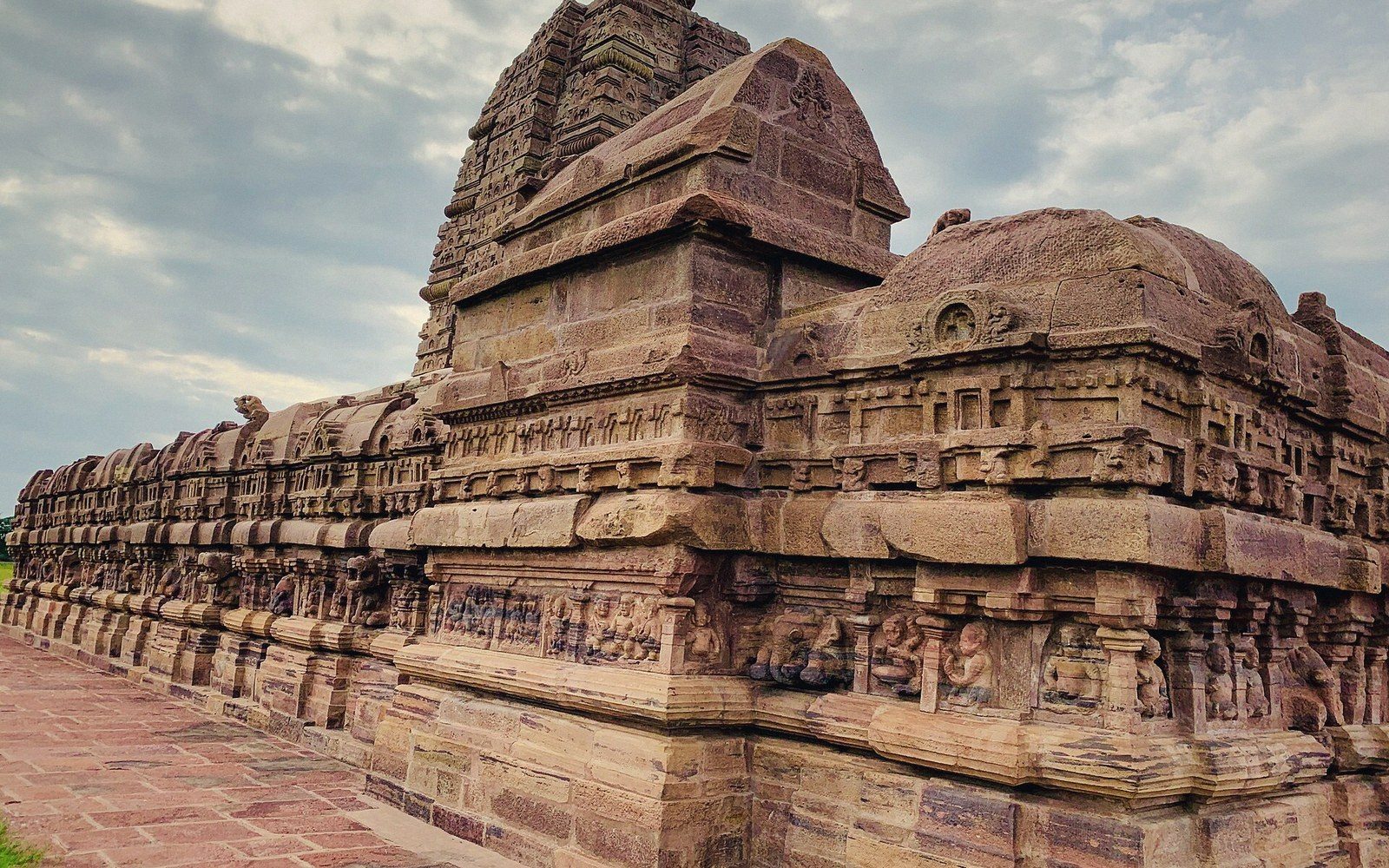
Where most temple traditions begin with a foundation and build upward, rock-cut architecture works in reverse: the mountain is the material, and the building is what remains after subtraction. No mortar, no coursing, no possibility of correction — a chisel stroke taken too far cannot be undone. The discipline this imposes on a mason is absolute, and it produced, across roughly a thousand years of Indian practice, some of the most rigorous spatial thinking in the subcontinent's architectural history.
01The logic of subtraction
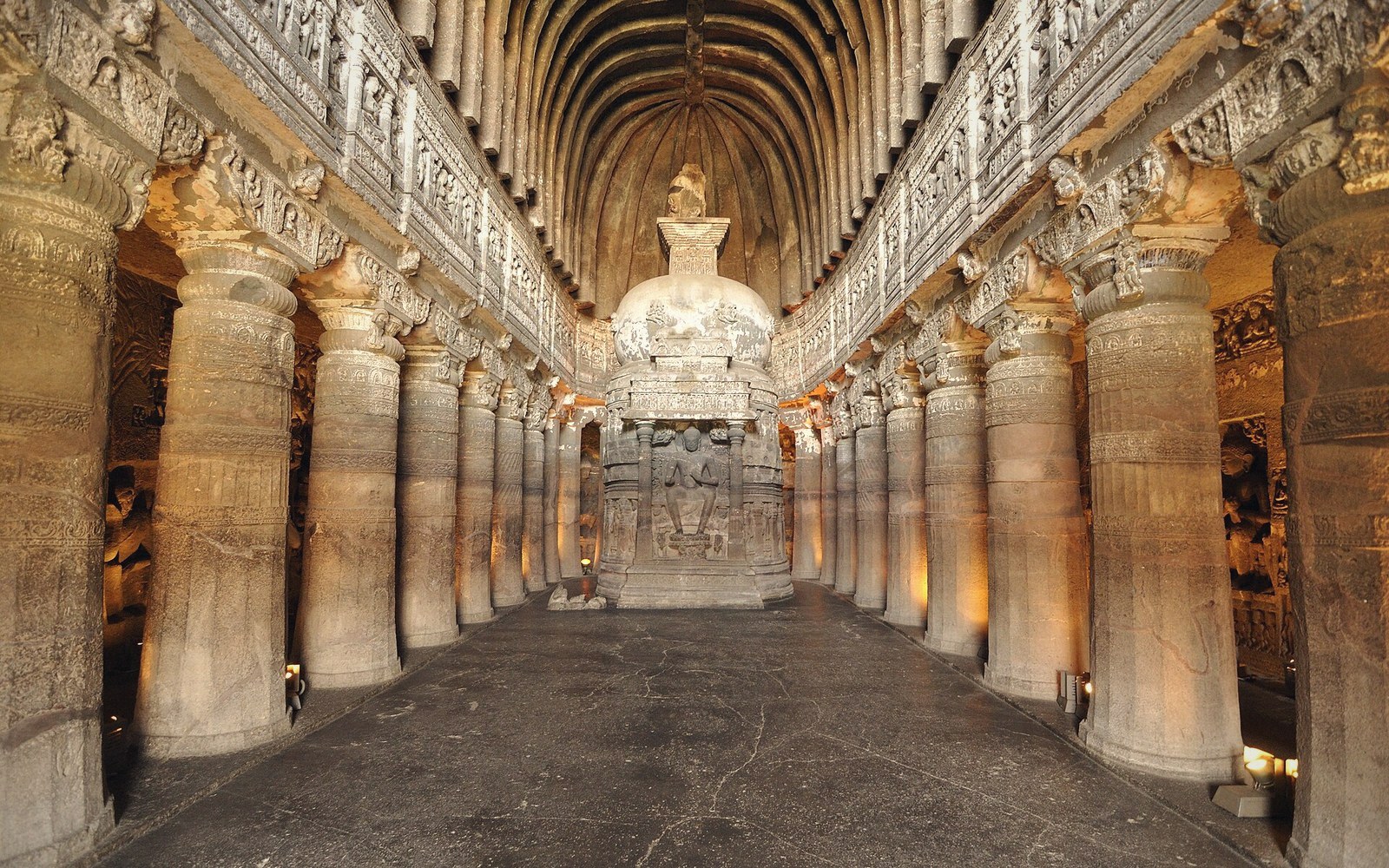
The earliest rock-cut work in India is not temple architecture at all but the chaitya halls and viharas — prayer halls and monasteries — cut into basalt escarpments for Buddhist communities from around the third century BCE onward. The Barabar caves in Bihar, polished to a mirror finish by Mauryan craftsmen, are among the oldest dateable examples. The tradition expanded dramatically under later patronage: the Western Deccan sites at Ajanta and Ellora, cut into volcanic traps in the hills above what is now Aurangabad, represent the tradition at its most sustained. Ajanta's painted halls belong broadly to the Vakataka period, fifth and sixth centuries CE; Ellora's range runs from Buddhist to Hindu to Jain, compressed into a single escarpment over several centuries.
The structural conventions of rock-cut work are borrowed from built traditions — columns, pilasters, beam-and-bracket ceilings, projected vestibules — but they are simulated rather than structural. A column carved from the living rock carries nothing; it reads as column because the masons understood the grammar of the built world and reproduced it in negative. The ceiling above a rock-cut mandapa (pillared hall) does not span anything; it is merely the portion of rock left after the chamber below was cleared. This translation from tectonic logic to representational logic is one of the things that makes rock-cut work intellectually distinctive.
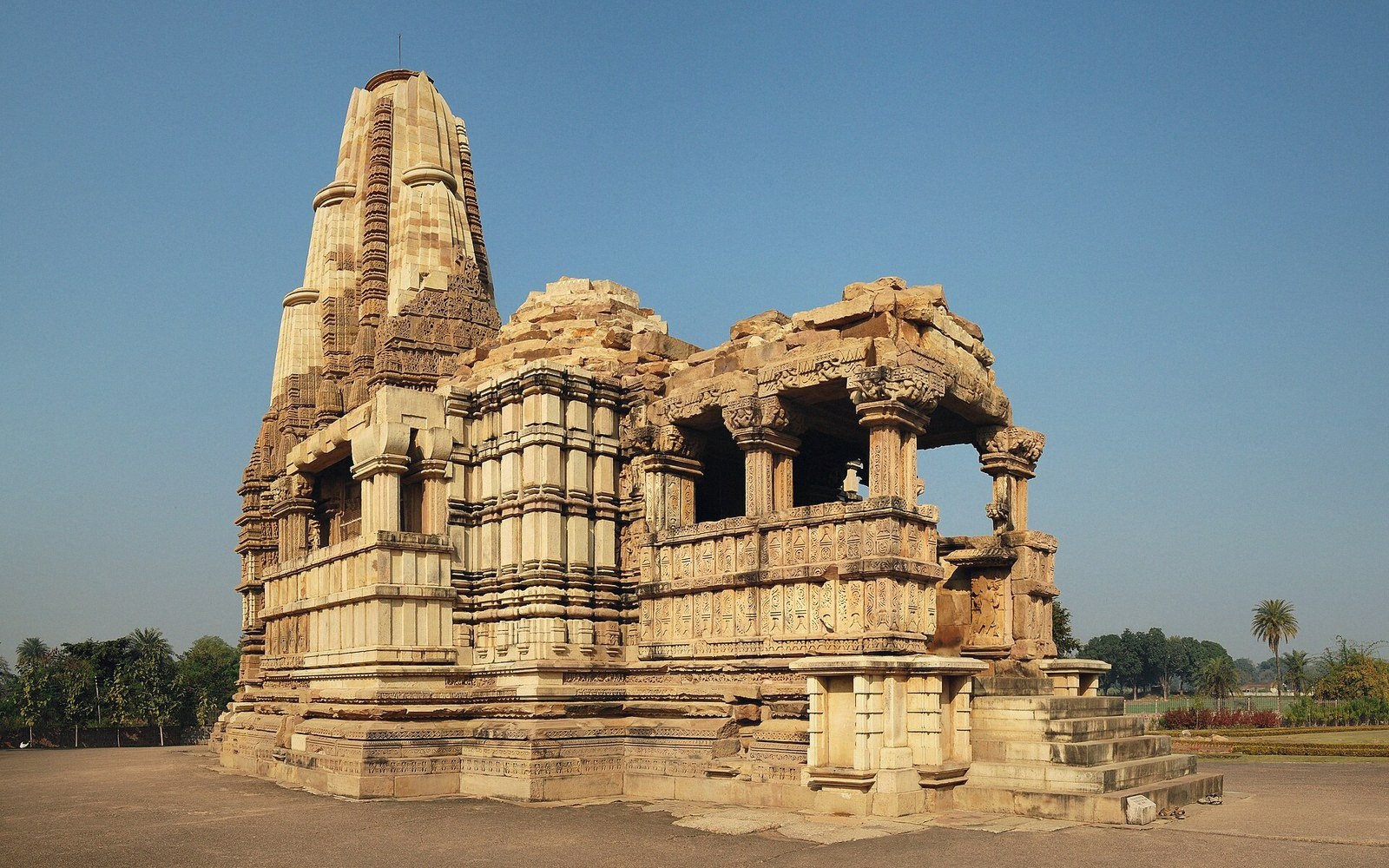
Kailasa at Ellora, commissioned under the Rashtrakuta king Dantidurga in the eighth century and substantially completed under his successor Krishna I, takes this logic to its extreme. Rather than excavating a series of halls, the masons cut away the hillside to isolate a freestanding temple mass, then carved it top-to-bottom as a Shaiva shrine. The result replicates the three-dimensional form of a structural Nagara and Dravida temple — including a detached entrance gateway, a Nandi pavilion, and subsidiary shrines — while remaining inseparable from the bedrock on which it stands. The volume of rock removed is estimated at roughly two hundred thousand tonnes. Not a single load-bearing joint was ever required.
02South and east
In the Tamil south, the Pallava dynasty worked an analogous tradition in granite. The rathas at Mamallapuram — carved in the seventh century under Narasimhavarman I, known as Mamalla — are monolithic forms cut from isolated boulders and outcrops on the coastal plain, each shaped to represent a different structural type: a barrel-vaulted chaitya form, a multi-storeyed Dravida tower, a simple apsidal hut. They were never completed and may never have been intended for active worship; they read as demonstrations of formal possibility, a catalogue of structural types rendered in miniature. Nearby, the Shore Temple is built, not cut — the visible difference in material confidence between the two modes is instructive.
The Udayagiri and Khandagiri caves in Odisha, cut for Jain communities under the Mahameghavahana king Kharavela in the first century BCE, show a parallel development in the east, stylistically distinct from both the Deccan and the south. Cave 1 at Udayagiri — the Rani Gumpha — is a double-storeyed excavation with carved friezes running across its facade, closer in organisational logic to domestic palace architecture than to a shrine.
What unites all these traditions across geography and period is the irreversibility of the work. Built masonry allows a mistake to be dismantled and relaid; bad stone can be replaced; a column that cracks can be removed. In rock-cut architecture, the craftsman's judgment has to be right before the chisel falls, and then right again, continuously, for however long the work takes — years at Kailasa, probably decades at Ajanta. The architecture that resulted is, in the most literal sense, inseparable from its site.
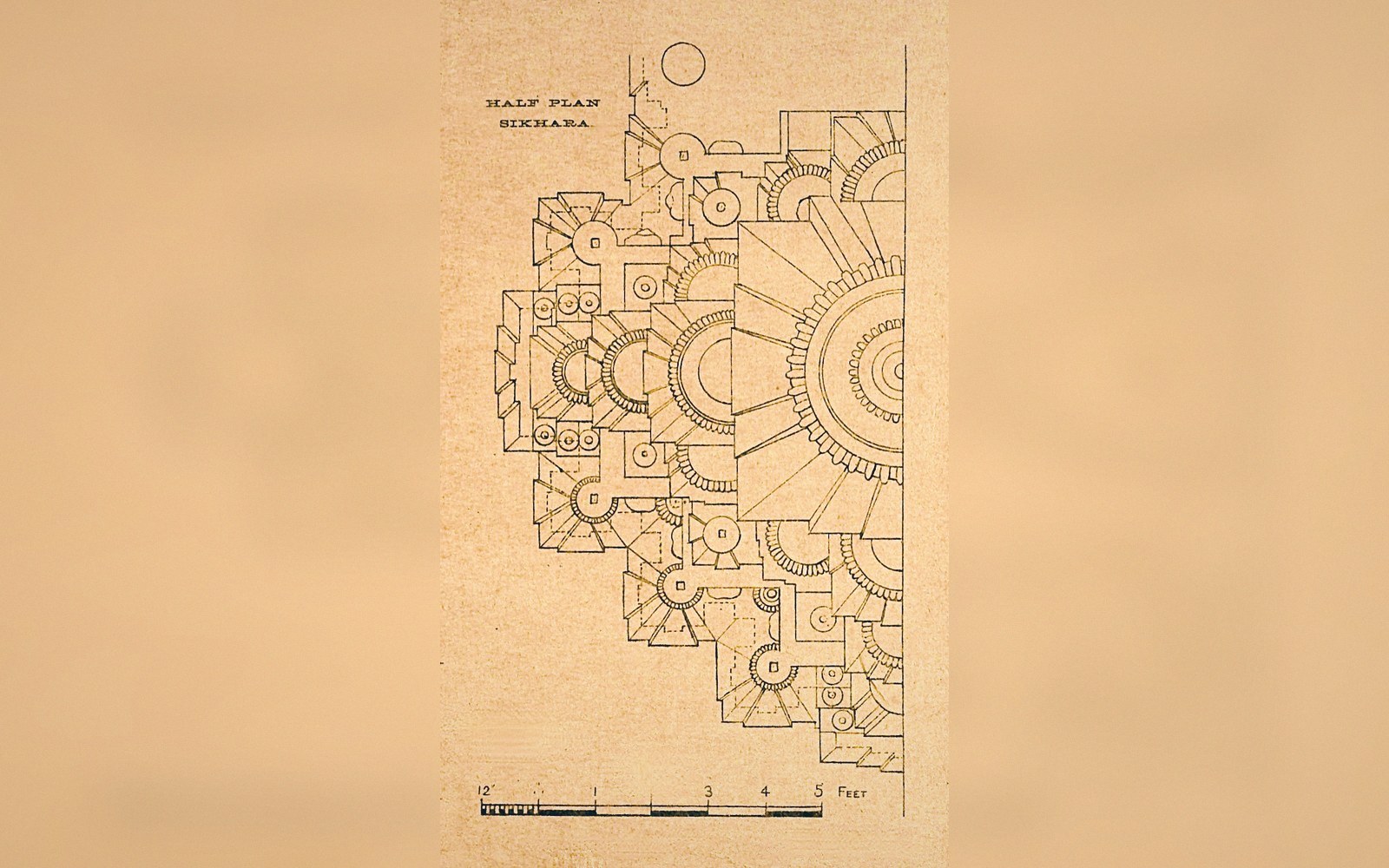
The Barabar caves in Bihar, polished to a mirror finish by Mauryan craftsmen, are among the oldest dateable examples.