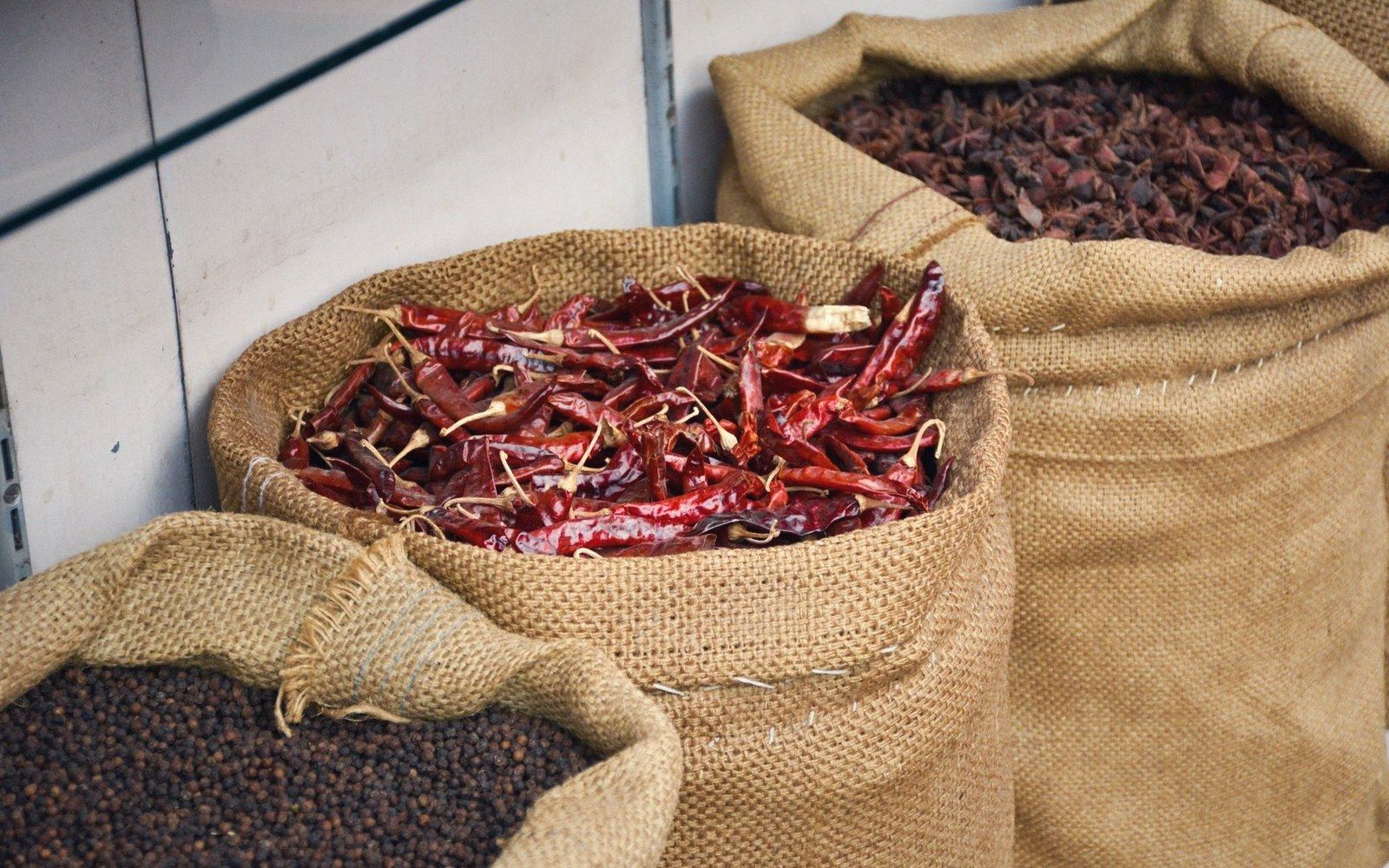
The godown sits at the centre of the spice economy, and almost no one talks about it.
A spice does not travel from field to market in a single movement. Between the grower and the buyer sits a chain of handling — drying, grading, storing, sampling — that decides the price as much as the crop itself does. The godown, a term for a warehouse carried into English from the Malay gudang by way of the coastal trade, is where that work happens.
In Kochi's old Mattancherry quarter and along the Malabar Coast further north, godowns were built thick-walled and high-roofed for good physical reason: pepper and cardamom, both native to the Western Ghats, are volatile, and a poorly ventilated store will sweat moisture back into the grain and rot the batch. The buildings are not decorative. Lime-plastered laterite, slatted ventilation gaps near the roofline, raised timber floors keeping the stock off the damp ground: these are material decisions made in response to the chemistry of the goods.
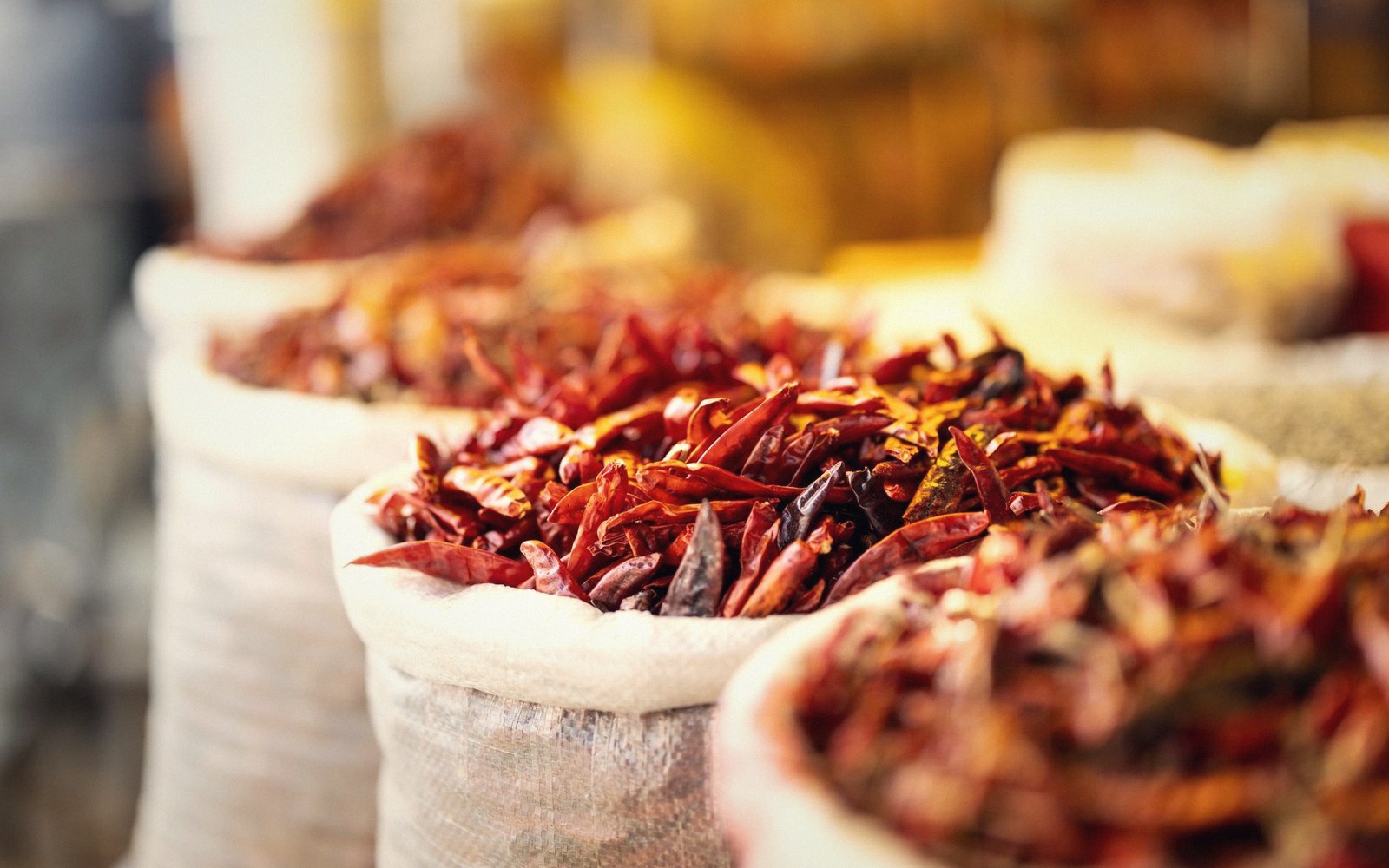
Grading is the hidden expertise. Pepper is sorted by berry size and density — light berries are separated by flotation, the heavy stock dried further and graded by screen. Cardamom pods are sorted by size, colour, and whether the capsule is whole. Each grade commands a distinct price; the knowledge of what constitutes the top grade in a given export season belongs to the broker, not the farmer, which has always been where the margin lives.
The great trading families of the Malabar — many of them Mappila Muslim merchants with networks stretching to the Persian Gulf, or Syrian Christian traders whose houses still stand in Kottayam — built their commercial identities around this knowledge. A firm's reputation was its grading standard, enforced by the nasal check of a senior partner who could tell adulteration, age, and provenance from a pinch of ground stock. The Cochin Chamber of Commerce, established in the colonial period, eventually codified what had been private guild knowledge into formal grade specifications that persisted into modern export law.
The physical godown culture of the Malabar is now compressed and partly mechanised, but the logic has not changed. Storage and grading remain the part of the trade that the price depends on, and the part nobody photographs.
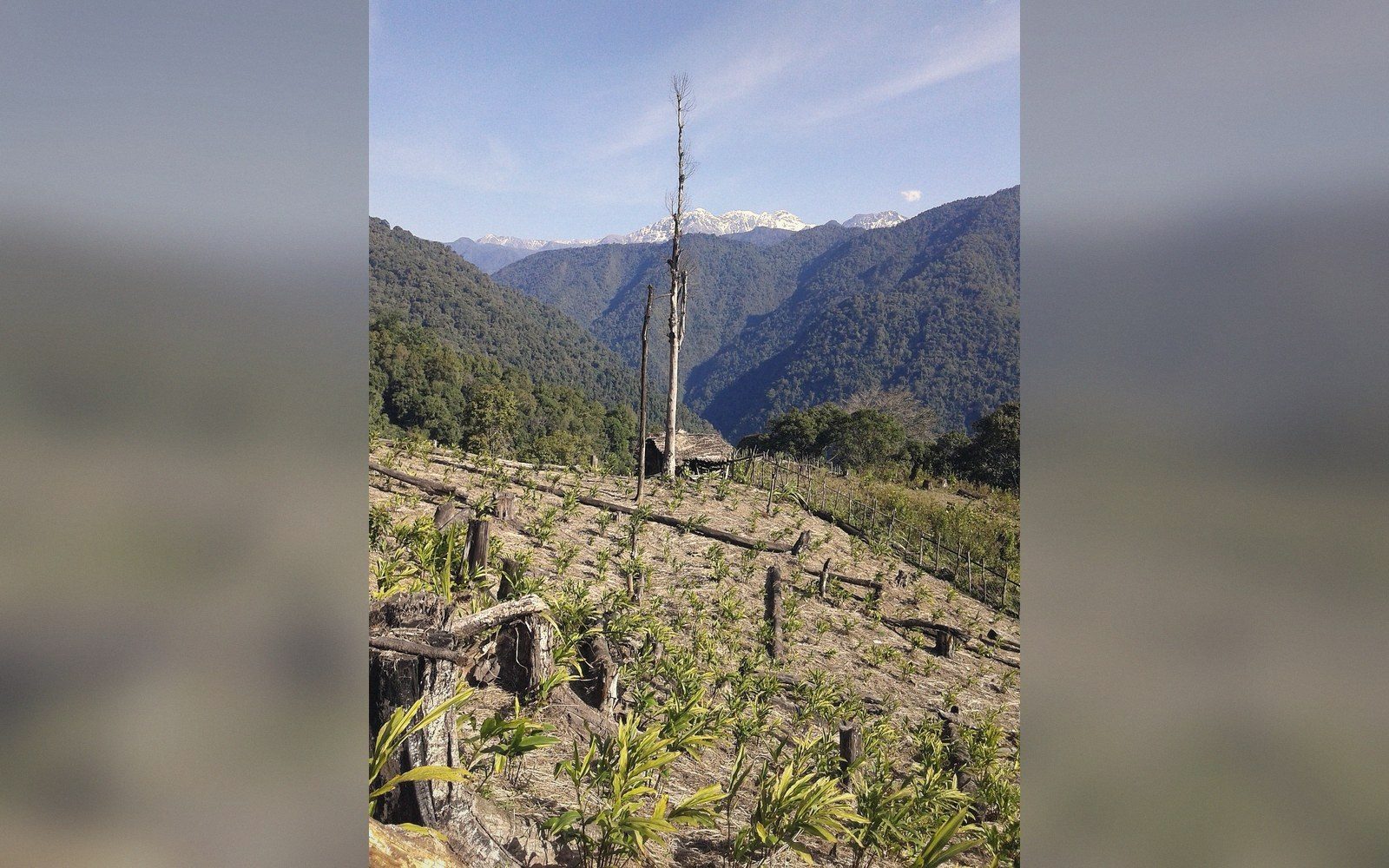
A spice does not travel from field to market in a single movement.