
When one plot holds four centuries of building, the ground itself becomes the document.
India has a particular kind of site where nothing was ever fully demolished and nothing was ever fully built from scratch. A Mughal garden platform gets a colonial bungalow sited at its centre. A Hindu temple's rubble becomes the foundation course of a mosque, which then acquires a British-era drain running under its eastern wall. A fort that was Rajput, then Mughal, then Company, then Crown, ends up with a telegraph room inside a medieval gatehouse and a concrete water tank poured over a sandstone cistern.
This layering is not incidental; it is structural. Each occupying authority built on what was already there because foundations, materials, and high ground were already proven. The British in particular inherited and adapted rather than cleared — partly from pragmatism, partly because the survey tradition valued what existed. The Archaeological Survey of India, founded in 1861 under Alexander Cunningham, made it a formal matter to document standing fabric even while new construction was proceeding beside it.

The result is a stratigraphy that a visitor reads horizontally as much as vertically. At Golconda, the Qutb Shahi fortifications incorporate older masonry in their lower courses. At Agra Fort, the Mughal pavilions stand on a raised platform that has British-period offices tucked into its undercroft. Delhi and Lucknow contain sites — Purana Qila, Humayun's Tomb, the Residency ruins at Lucknow — where the ground plan encodes five or six distinct building moments in different materials and at different levels.
Colonial builders, when they did choose to clear, sometimes inadvertently preserved: rubble infill sealed earlier floors, and building activity drove exploratory digging that recorded what it destroyed. The princely states added a further layer — buildings commissioned to be legible to two audiences at once, Rajput and imperial, and placed strategically on older sacred or administrative ground to claim both genealogies simultaneously.
Reading any one of these sites requires holding multiple chronologies at once. The moulding profile at the base of a plinth may be Sultanate; the iron tie-rod through the wall above it, colonial; the tile-and-mortar repair on the face, twentieth century. The plot remembers everything that was asked of it.
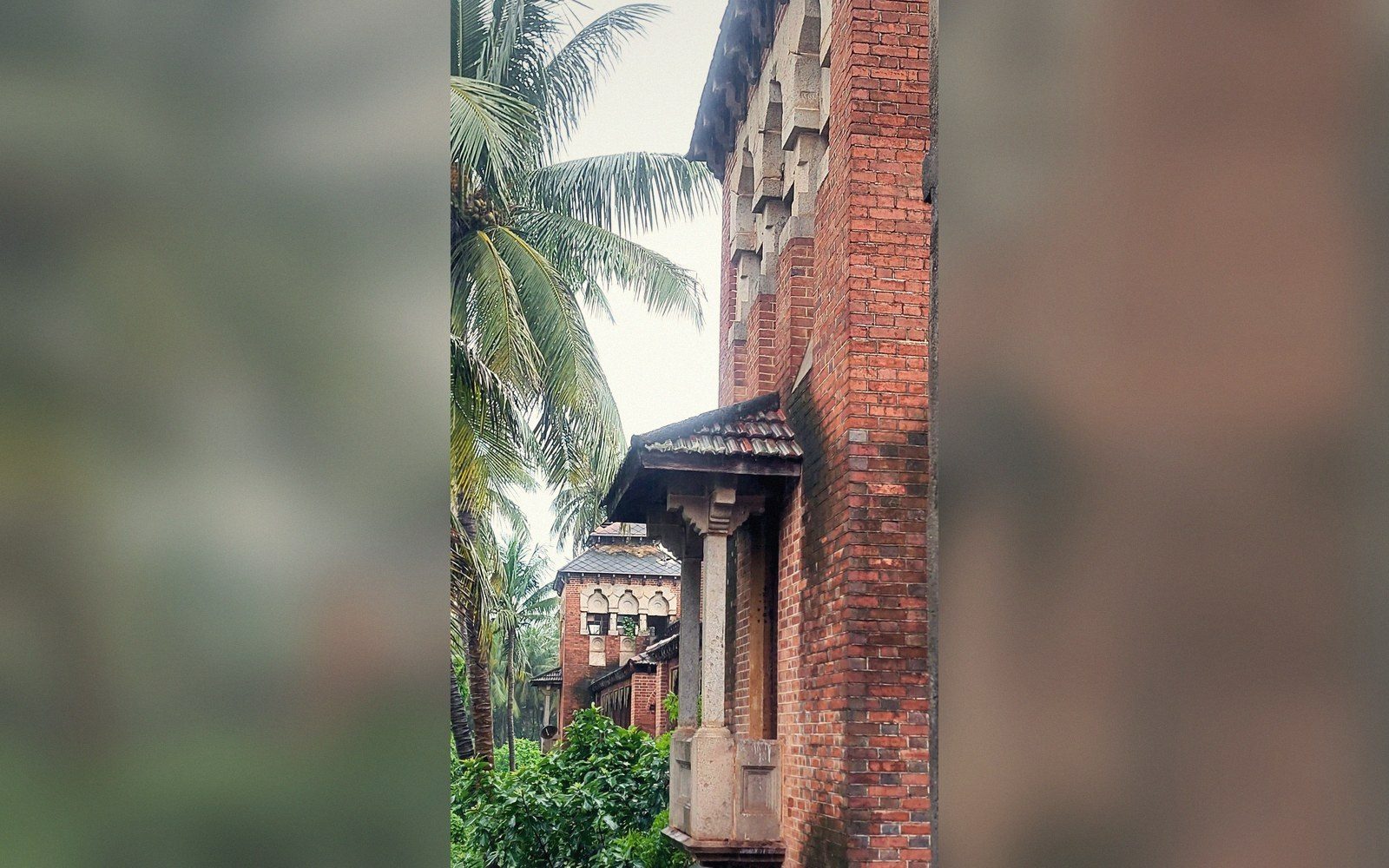
India has a particular kind of site where nothing was ever fully demolished and nothing was ever fully built from scratch.