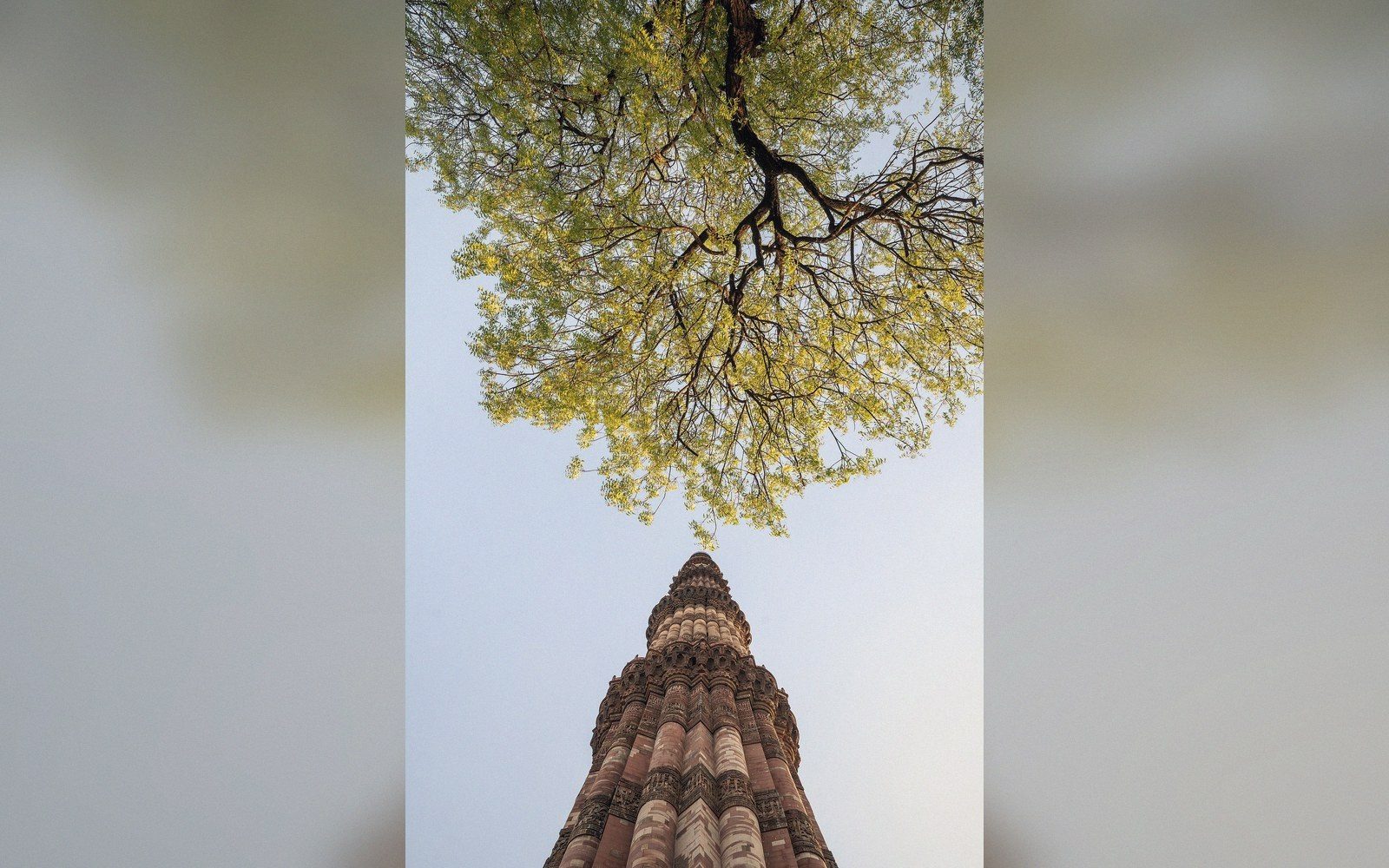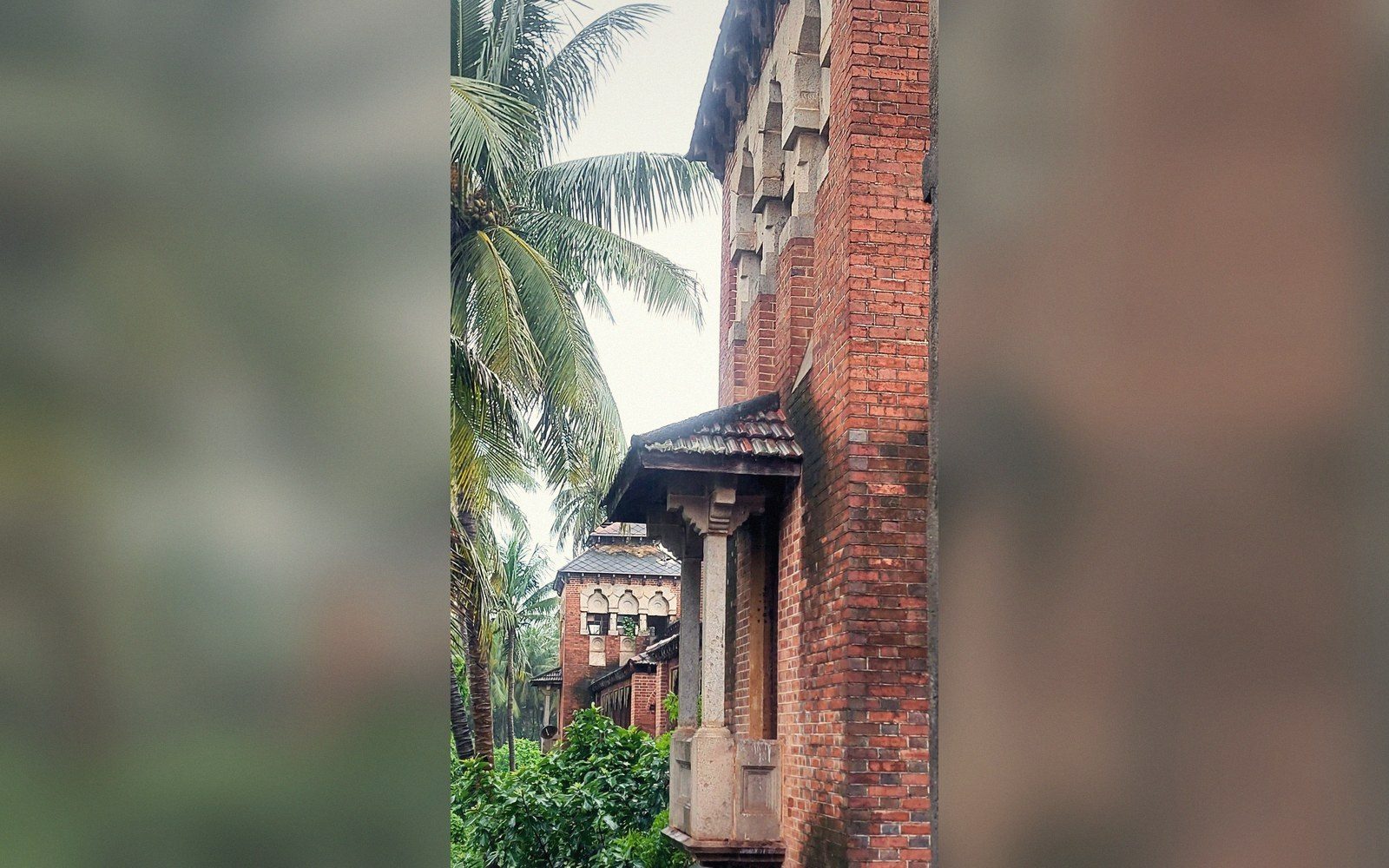
Colonial public building in India arrived with a structural confidence that local stone traditions had never needed: the cast-iron column, machined to identical dimensions and shipped from foundries in Glasgow, Coalbrookdale and Calcutta's own Jessop & Co. What it met on arrival was a climate that had already solved the problem of heat and glare through architecture — the deep arcade running along a building's street face, shading the footpath and the shops or offices behind it.
The collision of these two things — imported iron and inherited arcade logic — produced some of the most distinctive streetscapes in Bombay, Calcutta, Madras and the smaller colonial towns that grew around military cantonments or trading posts. Neither element was decorative in origin. Both were working answers to real problems, and their meeting produced a functional hybrid that became a recognisable type.
01Structure and shade
The arcade had deep roots across South Asia before the British arrived. Covered walkways appear in Mughal market streets, in the colonnaded frontages of merchant havelis, and in the verandah — verandah itself a word whose exact etymology is disputed, claimed by both Portuguese and Hindi — that wrapped around almost every prosperous house in the subcontinent's hot zones. The principle was simple: keep the sun off the wall, keep the ground-floor user out of direct radiation, and allow cross-ventilation by leaving the outer face open.
What cast iron contributed was economy of section. A stone or brick column capable of carrying a floor above needed a girth that ate into the shaded width beneath. A cast-iron column carrying the same load could be a hollow shaft of four or five inches diameter, transferring weight efficiently and leaving the arcade genuinely open. The engineers and public works departments of the various colonial administrations understood this immediately, and from roughly the 1830s onward, iron columns appeared under arcade roofs across the subcontinent.
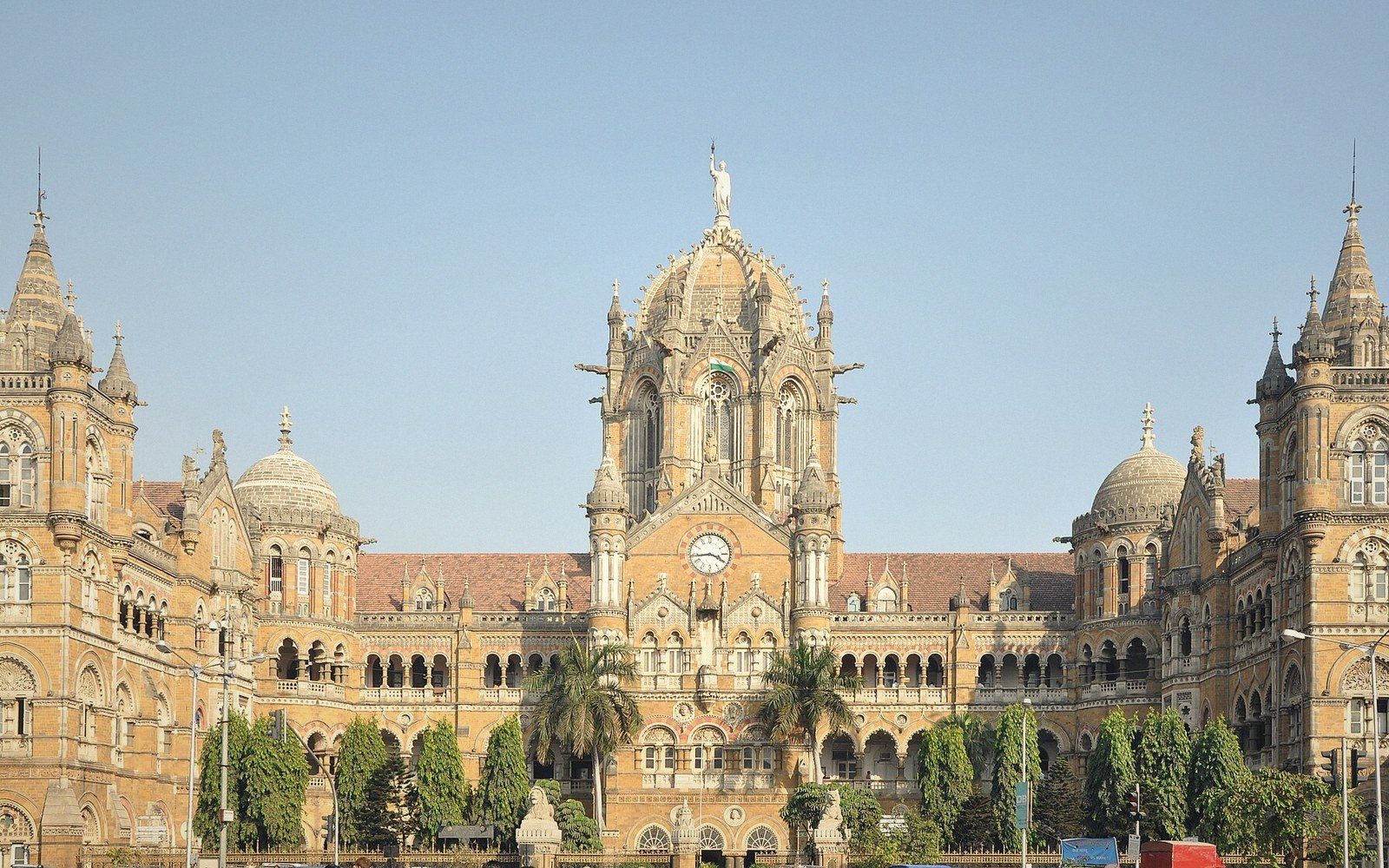
In Bombay, the great civic buildings of the second half of the nineteenth century — the High Court, the municipal offices, the university buildings — used Gothic revival forms executed partly in the local basalt, with ironwork reserved for internal galleries and secondary colonnades. The celebrated Crawford Market of 1869, designed by William Emerson with a frieze by Lockwood Kipling, used cast iron throughout its market hall interior. In Calcutta, the arcaded streets of Dalhousie Square and the older trading quarters of Burrabazar show iron used more plainly, unornamented shafts supporting shallow brick arches or flat concrete lids. Madras developed its own variant: deep first-floor verandahs on iron columns along the streets of George Town, the city's trading core, where the shade depth runs to three and four metres — proportioned for a latitude closer to the equator than either Bombay or Calcutta.
The design decision that most reveals the thinking of the period is what was placed on top of the iron column. Where budgets allowed and prestige mattered, iron capitals were cast in classical forms — Doric, Ionic, Corinthian — shipped as catalogue items from British foundry pattern books. Where function dominated, the capital was a simple spreading plate, and the ornament, if any, was in the spandrel between arch and column, sometimes filled with decorative ironwork, sometimes left plain. The combination of a machine-made structural element with hand-cut local stone for the arches above it records, in elevation, exactly the two economies that were meeting: one industrial, one still craft-based.
The arcade form outlasted direct colonial administration. Reinforced concrete replaced iron in most new public buildings after the 1910s, but the logic of the shaded walkway persisted, absorbed into PWD standard drawings and municipal building bylaws that required ground-floor setbacks and overhead cover in commercial zones. The shaded street survived because the climate that made it necessary has not changed.
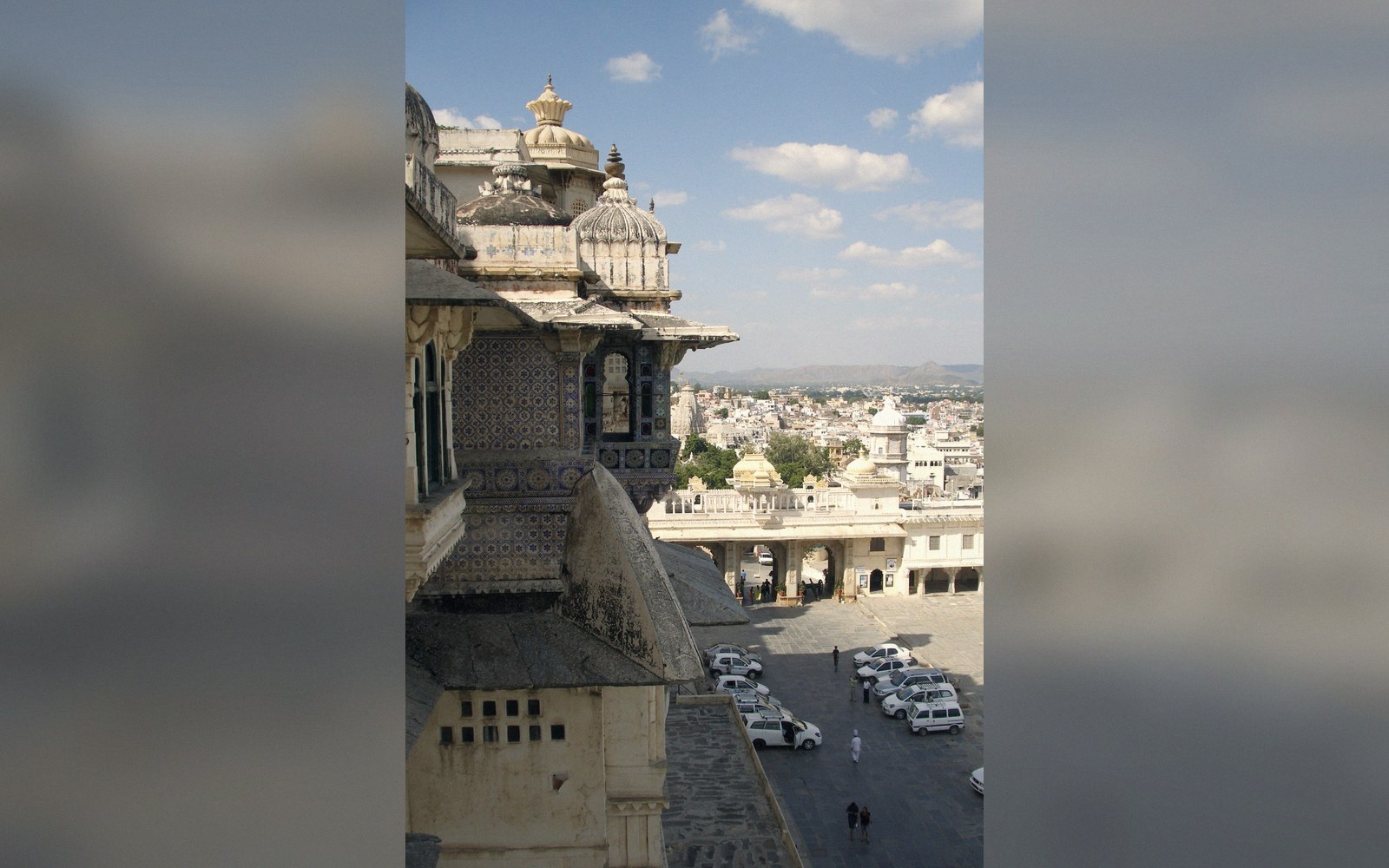
Both were working answers to real problems, and their meeting produced a functional hybrid that became a recognisable type.